

How Does the Breville Barista Express Impress Steam Wand Differ from Standard Models?
The Breville Barista Express Impress separates itself from earlier iterations through a re-engineered steam wand that prioritises microfoam consistency and user control. Unlike the fixed-position wands found on many entry-level machines, this model features a stainless steel, ball-jointed wand that allows precise angling within the pitcher, helping the barista target the vortex more accurately. The most significant advance, however, lies in the wand’s three-hole steam tip design, which delivers a more aggressive yet manageable steam flow for texturing milk to a silky, glossy finish ideal for latte art. Many home users find that the Impress wand heats milk about 15–20% faster than the wand on the standard Barista Express, reducing waiting time without sacrificing foam quality. This efficiency stems from a thermocoil heating system that maintains steady steam pressure across multiple drinks, a crucial factor when practising advanced patterns. For those experiencing issues with steam output, the detailed troubleshooting guide for the milk frother offers step-by-step remedies for common pressure and blockage problems.
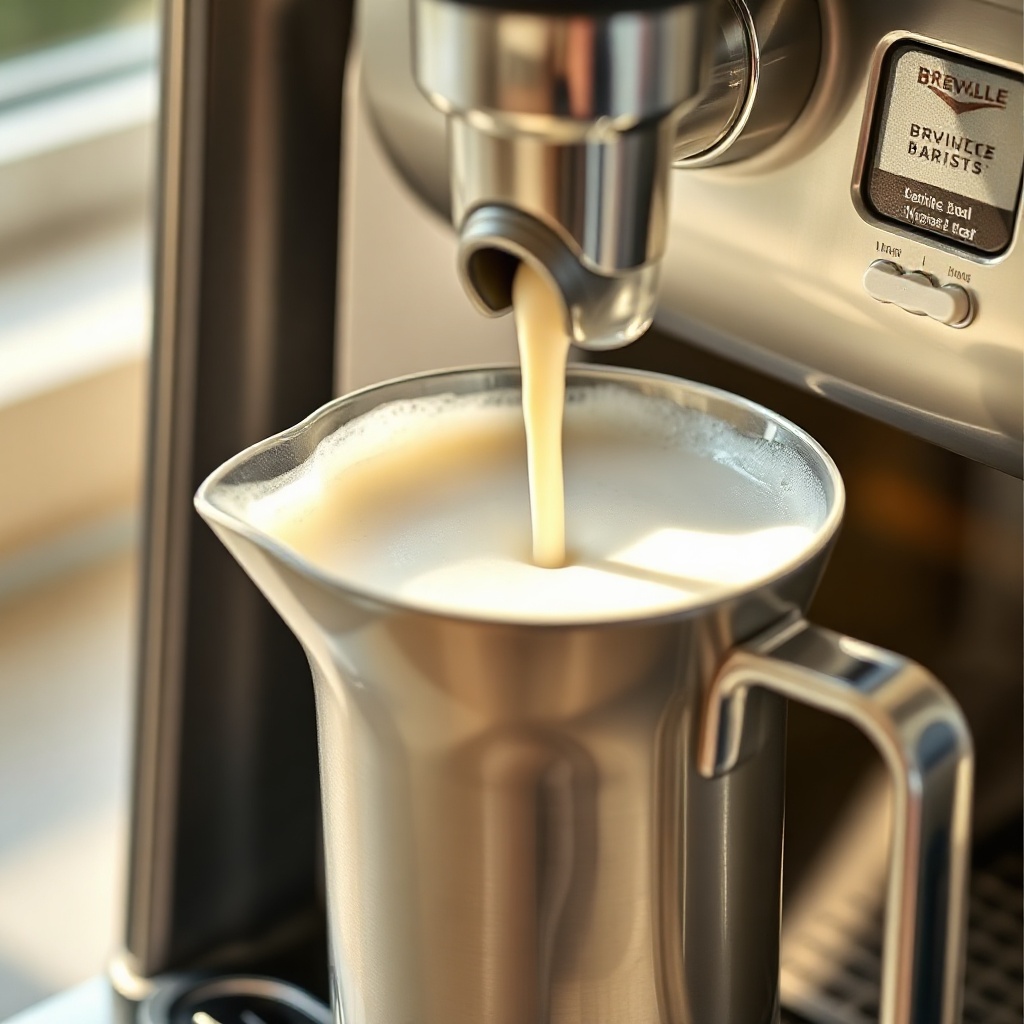
What Is the Correct Milk Temperature for Achieving Latte-Art-Grade Microfoam?
Temperature discipline is the foundation of latte art, and the Barista Express Impress simplifies this with its integrated temperature gauge and programmable pre-infusion logic. For standard cow’s milk (whole or semi-skimmed), the target range is 55°C to 65°C. Below 55°C, the proteins have not denatured enough to stabilise the foam, leading to large, uneven bubbles that collapse quickly. Above 65°C, the milk begins to scald, breaking down lactose and ruining both sweetness and texture. With the Impress, the combined PID temperature control and the thermocoil steam system help maintain a steady thermal environment, but the onus remains on the barista to stop the process at the correct moment. A common mistake—especially among newcomers—is overheating to 70°C or beyond, which results in a brittle foam that separates during pouring. For plant-based alternatives, such as oat or almond milk, the ideal temperature drops to 50°C–58°C because these milks contain less protein and are more heat-sensitive. The machine’s auto-purge function also ensures the wand remains clean after each use, preventing old milk residue from affecting subsequent frothing sessions. If you notice the wand failing to produce foam entirely, consult the dedicated troubleshooting page for steam wand issues before attempting more complex repairs.
How Should You Position the Steam Wand in the Pitcher for Optimal Vortex?
Mastering the vortex is the single most important skill for producing latte-art-ready milk, and the Impress wand offers enough flexibility to accommodate various pitcher sizes (350ml to 600ml). Begin by filling the pitcher to about one-third full with cold milk—overfilling reduces the room needed for expansion and increases the risk of scalding. Insert the wand approximately 1–2 cm below the milk’s surface, angled towards the side of the pitcher at roughly 20–30 degrees. As steam is released, lower the pitcher slightly so the tip sits just beneath the surface, creating a vigorous vortex that pulls air into the milk in an even, continuous spiral. The three-hole tip on the Impress naturally generates a wider aeration zone, which can be an advantage, but it also means the wand should not be placed dead-centre; doing so risks injecting air too aggressively, producing large bubbles rather than fine microfoam. Once the milk reaches around 35°C, the aeration phase ends: submerge the tip entirely and tilt the pitcher to continue stretching the foam without adding more air. This “texturing” phase continues until the target temperature is reached. A flawed vortex is often due to wand positioning or steam pressure issues; for those encountering a complete lack of foam, the specific steam wand troubleshooting guide covers clogs and pressure misadjustments.
Can the Breville Barista Express Impress Handle Oat Milk and Other Alternatives?
The shift towards plant-based milk has made barista-quality alternative milk frothing a must-have feature, and the Impress handles oat and almond versions reasonably well, though with important caveats. The three-hole steam tip’s higher flow rate can sometimes over-aerate thin, low-protein milk, leading to a frothy but airy texture that lacks the dense microfoam needed for detailed latte art. To compensate, baristas should reduce the aeration phase by approximately 5–10 seconds compared to dairy milk, and aim for a lower final temperature—around 52°C–55°C for oat milk and 48°C–52°C for almond milk. Brand selection also matters: barista-specific oat milks (e.g., Oatly Barista Edition or Minor Figures) are formulated with added protein and stabilisers that respond much better to steam than standard breakfast alternatives. When using the Impress, the best results come from keeping the wand tip slightly deeper than with dairy milk, minimising surface splashing, and maintaining a steady vortex without aggressive tearing. For those interested in the water quality aspect of milk frothing, note that hard water can leave mineral deposits on the steam tip and inside the wand, which may impair steam pressure over time; this is covered comprehensively in the comparison of water filtration between the Impress and the De’Longhi Magnifica S. Filtered water extends the life of the steam system and improves coffee extraction, making it a worthwhile investment for the latte art enthusiast.
| Milk Type | Ideal Temperature Range | Aeration Time (approx.) | Foam Quality Rating | Best Practice Tip |
|---|---|---|---|---|
| Whole cow’s milk | 55°C–65°C | 8–12 seconds | Excellent (dense microfoam) | Maintain vortex until 35°C |
| Skimmed cow’s milk | 55°C–60°C | 6–10 seconds | Good (slightly thinner) | Reduce aeration to avoid foam |
| Barista oat milk | 50°C–58°C | 5–8 seconds | Very good (if brand-specific) | Keep wand slightly deeper |
| Almond milk | 48°C–55°C | 4–7 seconds | Fair (low protein volume) | Use stabilised barista version |
What Are the Best Maintenance Practices to Keep the Steam Wand Performing Flawlessly?
The steam wand on the Breville Barista Express Impress is built to last, but neglect will degrade performance and introduce off-flavours into your milk. After every single frothing session, engage the auto-purge function (if enabled) to push residual milk out of the wand tip—this prevents dried milk from clogging the three-hole nozzle. At least once a week, remove the steam tip (it unscrews easily) and soak it for 15 minutes in a solution of warm water and a descaling agent or white vinegar (diluted 1:1). Use a fine needle or the provided cleaning tool to clear any hardened milk deposits from the holes. The outer shaft of the wand should be wiped down with a damp cloth after each use to prevent milk scale from building up. Neglecting these steps often leads to reduced steam velocity and uneven foaming; a common complaint is that the wand “sputters” instead of producing a smooth hiss. For a more thorough investigation of steam failures, see the step-by-step milk frother diagnostic page. Additionally, water mineral content plays a huge role in scale formation inside the thermocoil steam system; installing an appropriate water filter is one of the most effective ways to extend the lifespan of the whole machine, and the guide to selecting the best water filter for mineral balance provides clear recommendations for this model.
What Owners Say About Milk Frothing Performance on the Impress
Feedback from home baristas using the Breville Barista Express Impress for milk-based drinks consistently highlights the ease of achieving latte-art-quality microfoam compared to earlier Breville models. On dedicated coffee forums and owner groups, the most praised aspect is the steam wand’s power consistency: users report that even after pulling two or three consecutive shots, the steam pressure holds steady, allowing them to texture milk for multiple lattes without waiting for the boiler to recharge. Some owners note a learning curve with the three-hole tip, particularly when switching from a single-hole wand, as the higher flow rate can initially produce larger bubbles if the pitcher is positioned incorrectly. However, most adapt within a week and then appreciate the speed. A recurring point of criticism is that the wand does not swivel 360 degrees like some commercial units, but the ball-joint offers enough range for right‑ or left-handed operation. Owners who have diligently followed the descaling and cleaning schedule report consistently good foam up to three years after purchase, while those who ignored water filtration or cleaning complained of reduced steam pressure and sputtering. Many experienced users couple the machine with a small digital thermometer to double‑check the Impress’s temperature gauge, which can drift slightly over time—a minor but noted quirk. The general consensus is that the Impress is one of the best all-in-one machines for the budding latte artist at a sub-£800 price point.

Frequently Asked Questions
1. Why does my steam wand produce large bubbles instead of microfoam?
Large bubbles typically indicate that the steam wand tip is too close to the surface of the milk during the aeration phase or that the milk has been overheated beyond 65°C. Submerge the tip 1–2 cm and angle it at 20–30 degrees to create a gentle vortex. Reduce aeration time if the milk starts to bubble aggressively.
2. Can I use the Impress steam wand to heat milk for hot chocolate?
Yes, but for hot chocolate the texture is less critical. Heat the milk to approximately 60°C–65°C, then add chocolate syrup or powder. The steam wand can also help emulsify the chocolate into the milk for a smoother drink.
3. How often should I descale the steam wand system?
BrewWise recommends descaling the entire machine, including the steam circuit, every 2–3 months if using tap water, or every 4–6 months if using filtered or softened water. More frequent descaling may be needed in hard water areas, and the pressure profile adjustment guide includes related advice on maintaining optimal brew and steam settings.
4. Why does the steam wand stop producing steam mid-froth?
This is often due to the thermocoil overheating or a blocked steam hole. Allow the machine to rest for 2–3 minutes, then attempt a manual purge. If the problem persists, check the steam holes for dried milk deposits and clean with a needle. Consult the steam wand troubleshooting page for advanced fixes.
5. Is it possible to froth milk without using the steam wand?
The Impress does not include a separate cold frother or whisk attachment; all milk texturing is done via steam. For cold foam (e.g., for iced lattes), a handheld frother can be used, but the steam wand is the only integrated option for hot milk preparation.
6. What is the cheapest milk that still works well for latte art on this machine?
Standard whole cow’s milk at around £1.30 per litre offers the best balance of cost and frothability. Store-brand barista oat milk at roughly £1.80 per litre is a good budget plant-based alternative. Avoid ultra-filtered or UHT milk, as the protein structure is often damaged during processing.