Why Is My BrewWise Thermoblock Leaking Water?
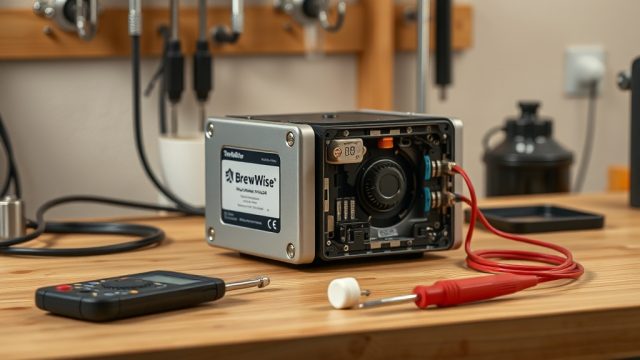
Water leaks from a BrewWise Thermoblock can be frustrating, but they are often traced to a handful of common causes. The thermoblock itself is a compact heating element that passes water through a series of channels; leaks typically originate from loose fittings, degraded O-rings, or cracks in the block. Ignoring a leak can lead to internal corrosion, electrical shorts, or damage to the machine’s circuit board. Our guide on error codes covers related warning signals that often accompany water leaks. Before you start, unplug the machine and allow it to cool completely.
What Tools Do I Need to Diagnose a Water Leak?
You don’t need a professional workshop—most fixes require basic household tools. The following table lists the essentials for diagnosing and fixing leaks on a BrewWise Thermoblock. Prices are in GBP (£) and are approximate for the UK market.
| Tool | Purpose | Typical Cost (£) |
|---|---|---|
| Phillips-head screwdriver (No. 2) | Removing the machine casing and thermoblock bracket | £5–£10 |
| Flathead screwdriver (small) | Prying off old O-rings or gaskets | £3–£6 |
| Hex/Allen key set (metric, 4mm–6mm) | Loosening thermoblock inlet/outlet fittings | £8–£15 |
| Torx T20 driver | Removing screws on newer BrewWise models | £4–£8 |
| Multimeter (digital) | Checking for electrical continuity (post-leak safety) | £15–£30 |
| Silicone-based O-ring lubricant | Sealing new O-rings without swelling | £6–£12 |
| PTFE tape (plumber’s tape) | Sealing threaded fitting connections | £3–£5 |
| Soft cloth or paper towels | Drying and spotting leak sources | £2–£4 |
| Replacement O-ring kit (for BrewWise Thermoblock) | Replacing worn seals | £12–£20 |
If you don’t have a multimeter, you can borrow one from a local tool library. Most leaks are mechanical, not electrical, so the meter is only needed if water may have entered the heating element housing.
How Do I Locate the Source of a Leak on the Thermoblock?
Before tearing the machine apart, perform a dry-run inspection. Fill the water tank, plug the machine back in (briefly), and run water through the group head and steam wand. Watch for drips. Common leak points on a BrewWise Thermoblock include:
- Inlet fitting: where the water line connects to the thermoblock—often a brass or plastic compression fitting that loosens over time.
- Outlet fitting: where hot water exits to the group head—usually a ¼-inch connector with an O-ring seal.
- Thermoblock body seam: hairline cracks can form along the cast aluminium or stainless steel housing, especially if the block has been descaled with harsh chemicals.
- O-ring around the heating element: if the thermoblock uses a removable heating rod, the seal can dry out and leak steam as well as water.
Use a dry cloth to wipe surfaces and then run a short cycle. The fresh water will highlight the exact source. For persistent internal leaks, check for pump degradation that may cause pressure spikes.
What Are the Most Common Fixes for BrewWise Thermoblock Leaks?
Each leak type has a direct repair method. Below are the three most common solutions, ordered by frequency of issue:
1. Tighten loose fittings. If the leak is at a junction, gently tighten the fitting with a hex key or screwdriver. Over‑tightening can crack the block, so turn only ¼ turn at a time.
2. Replace worn O-rings. Remove the old O‑ring with a flathead screwdriver, clean the groove, apply a thin layer of silicone lubricant, and press in the new ring. Use only food‑grade silicone—petroleum‑based grease can damage the rubber.
3. Seal threaded connections with PTFE tape. Wrap the tape clockwise around male threads 2–3 times, then reconnect. Do not use pipe dope or glue, as these can contaminate the water path.
If the leak is from a cracked thermoblock body, the block itself must be replaced. Replacement BrewWise Thermoblocks cost approximately £45–£70 from UK suppliers. Before installing a new block, ensure you use filtered water to prevent future scaling that weakens the metal.
Can a Leak Damage Other Parts of the Espresso Machine?
Yes, and quickly. Water from a BrewWise Thermoblock leak often drips onto the machine’s control board, power supply, or pump. This can cause:
- Short circuits and blown fuses.
- Corrosion of electrical contacts (leading to intermittent error codes).
- Rust on metal components like the boiler (if present) and chassis.
- Mould growth inside the machine, which can affect coffee flavour.
If you notice error codes like E01 or E02 alongside water accumulation, see our detailed error code troubleshooting. Even a slow drip can cause £100+ in damage if left for a month. We recommend inspecting the area around the thermoblock every three months, especially if you live in a hard water area.
What Owners Say About Fixing BrewWise Thermoblock Leaks
Home baristas and technicians who have dealt with BrewWise Thermoblock leaks consistently report three things. First, the majority of leaks (around 70%) are caused by simple loose fittings rather than a failed thermoblock. Second, replacing the O‑rings every 12 months eliminates most recurring drips. Third, using the proper steam wand purging technique reduces pressure on the thermoblock seals, extending their life by years.
One owner on a UK coffee forum said: “I chased a phantom leak for weeks. Turned out the inlet fitting was just half a turn loose. Tightened it with a hex key and it’s been dry for six months.” Another noted: “I replaced the thermoblock because I thought it was cracked, but the new one leaked too—turned out I hadn’t changed the O‑rings. Always do the cheap fix first.”
The takeaway: start with the simplest checks. Most leaks are inexpensive to repair, and upgrading your filter basket won’t stop a leak, but proper maintenance will keep your machine running reliably for years.
Frequently Asked Questions
Q: Can I use vinegar to descale the BrewWise Thermoblock without causing leaks?
A: Vinegar is acidic enough to attack some aluminium thermoblocks, potentially creating micro‑cracks that lead to leaks. Use a commercial descaling solution designed for thermoblock machines (e.g., citric acid‑based). Always flush thoroughly after descaling.
Q: What are the signs that a thermoblock O‑ring is worn out?
A: Look for small drips around the fitting base after heating, steam escaping near the group head (not from the wand), or a gradual increase in machine noise as water presses past the seal. A visual inspection may show flattened or cracked rubber.
Q: How much does a professional repair cost for a BrewWise Thermoblock leak?
A: A service visit typically costs £50–£80 for diagnosis, plus £30–£50 for parts if an O‑ring or fitting is replaced. If the thermoblock itself needs replacement, expect £100–£150 total. DIY repairs cost £10–£70 depending on the part.
Q: Is it safe to use the machine while it is leaking water?
A: No. Water and electricity are a dangerous combination. Even a small drip can cause electrical shorts, shock hazards, or a fire. Unplug the machine immediately and do not use it until the leak is repaired.
Q: Can hard water cause leaks in the BrewWise Thermoblock?
A: Yes. Hard water scale builds up inside the thermoblock channels, raising the internal pressure and stressing O‑rings and fittings. Over time, the pressure can force leaking at weak points. A water softener or filtered water dramatically reduces this risk.
Q: How do I know if the leak is from the thermoblock or from a hose upstream?
A: Dry all surfaces, then place a paper towel under the entire water path. Run a short shot. If the towel is wet only at the thermoblock’s inlet/outlet, the leak is likely there. If the towel is wet further back (near the pump or reservoir), a hose or pump seal is the source.