Breville Barista Express Impress: How Often Should You Descale?
Keeping your Breville Barista Express Impress running at peak performance hinges on a simple, often overlooked task: descaling. Over time, mineral deposits from hard water build up inside the machine, affecting everything from temperature stability to pump pressure. This guide answers the most common questions about descaling frequency, signs of scale buildup, and best practices to extend your machine’s life, all in the context of real-world UK usage.
What Happens if I Don’t Descale My Breville Barista Express Impress?
Scale accumulation acts as an insulating layer inside your machine’s boiler and thermoblock. This forces the heating element to work harder and longer to reach the correct brew temperature, leading to inconsistent extraction and potential overheating. More critically, scale can clog the water pathways, reducing flow rate and causing the pump to strain—a key reason for issues like low pump pressure, which you can explore in detail in our guide on Breville Barista Express Impress: Pump Pressure Too Low? Causes and Fixes.
In severe cases, scale deposits can break off and block the steam wand or hot water outlet, contributing to the frustrating problem of a non-frothing auto frother. For a deeper dive into that specific issue, see our article on Breville Barista Express Impress Auto Frother Not Frothing: Fixes. Ignoring descaling ultimately shortens the lifespan of seals, valves, and the heating element, potentially leading to expensive repairs.
How Does Water Hardness Affect Descale Frequency?
The hardness of your tap water is the single biggest factor determining how often you need to descale. In the UK, water hardness varies dramatically—from soft in the North and West to very hard in the South and East (e.g., London, Cambridge, and parts of Kent). The Barista Express Impress includes an integrated water hardness test kit, and using it is the first step to a tailored descaling schedule. We have a complete guide on this process: Breville Barista Express Impress: How to Test Water Hardness for Optimal Performance.
Here’s a realistic breakdown based on typical UK tap water conditions:
| Water Hardness Level | Typical UK Regions | Recommended Descale Interval |
|---|---|---|
| Soft (0-60 ppm) | Scotland, Northern England, Wales | Every 6-8 months |
| Medium (60-120 ppm) | Midlands, South West | Every 3-4 months |
| Hard (120-200 ppm) | London, South East, East Anglia | Every 2-3 months |
| Very Hard (200+ ppm) | Parts of London, Hertfordshire | Every 1-2 months |
Even if you use filtered or bottled water, it’s wise to test the hardness first. Some bottled waters actually contain higher mineral content than tap water.
What Are the Signs That My Machine Needs Descaling?
Beyond a calendar reminder, your Breville Barista Express Impress will give you both visual and performance-based clues. The most direct warning is the “Descale” light illuminating on the control panel. Do not ignore it—the machine is designed to detect scale buildup via flow rate sensors. However, you might also notice these symptoms before the light comes on:
- Longer brew times: A shot that normally takes 25-30 seconds now takes 40-50 seconds, even with the same grind setting.
- Inconsistent temperature: Coffee tastes sour (under-extracted) or bitter (over-extracted) despite dialing in. For more on temperature issues, read Breville Barista Express Impress: Brew Temperature Not Hot Enough?
- Weak steam pressure: The steam wand takes much longer to texture milk, or the auto-frother produces weak foam.
- Unusual noises: The pump sounds louder or more strained than usual, or you hear a gurgling sound from the boiler.
- Reduced water flow: The group head water flow appears uneven or trickles instead of a steady stream.
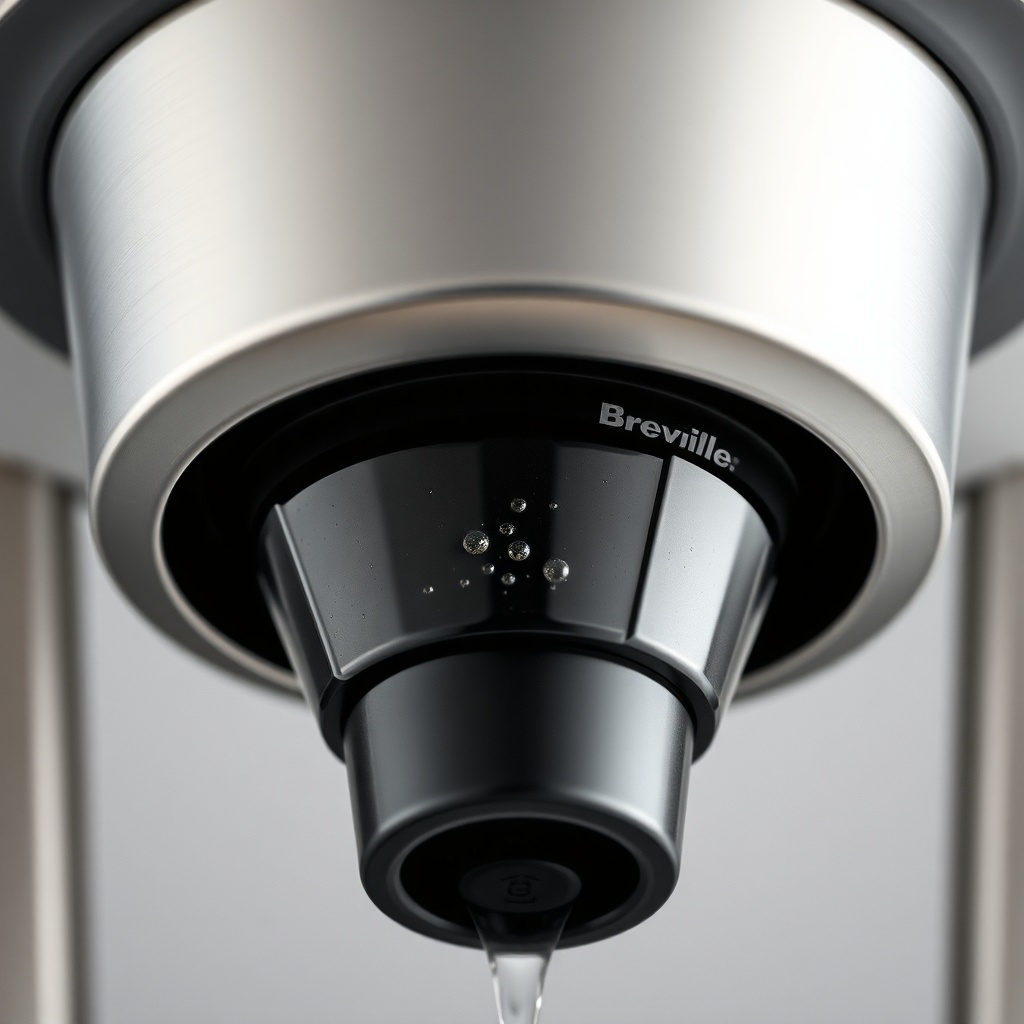
How Do I Descale My Breville Barista Express Impress Properly?
Descaling is straightforward, but it’s a process that requires patience—roughly 30-40 minutes total. Never use vinegar or citric acid; commercial descaling solutions are formulated to safely dissolve scale without damaging internal seals. Breville recommends their own descaling tablets or a compatible solution. For a detailed, step-by-step walkthrough, refer to our comprehensive Breville Barista Express Impress Descaling Guide: Step by Step. The general procedure is as follows:
- Empty the drip tray and water tank. Remove the water filter.
- Fill the tank with the descaling solution diluted to the manufacturer’s instructions (typically 500ml water + one tablet or 60ml liquid).
- Turn on the machine, enter descaling mode (hold down the 1-CUP and STEAM buttons simultaneously for 5 seconds).
- Run the descaling cycle—the machine will dispense the solution, pause, and then flush the system repeatedly.
- When the tank is empty, rinse it thoroughly and refill with fresh water to the MAX line.
- Run the full rinse cycle (the machine will prompt you). You may need to repeat the rinse cycle if the taste of descaling solution lingers.
- After rinsing, clean the drip tray and group head. Your machine is now ready for use.
Can I Use Filtered Water to Reduce Descaling Frequency?
Yes, absolutely. Using filtered water (via a jug filter or a plumbed-in filter) can cut descaling frequency by 50-70% in hard water areas. Many owners in London, for instance, report going from monthly descaling to every 4-6 months after switching to filtered water. However, be cautious: some “mineral water” brands are actually high in calcium and magnesium, which can accelerate scale. Stick with properly filtered or reverse osmosis water. The Breville Barista Express Impress is compatible with the standard charcoal water filters that fit in the tank, but these remove taste impurities, not scale-causing hardness. A water softener pitcher is better for mineral reduction.
What Happens if I Descale Too Often?
While it’s better to descale more often than not at all, over-descaling can be problematic. Descaling solutions are acidic, and frequent contact with fresh solution can gradually degrade rubber gaskets and O-rings over the machine’s lifespan. Over-descaling also wastes time and money on descaling products. If you’re in a soft water area, descaling every 1-2 months is excessive. Stick to the manufacturer’s guidance based on your hardness test results. If you’re unsure, err on the side of caution but don’t run a descal cycle more than once every 6 weeks unless the machine’s descale light illuminates.
What Owners Say
Feedback from UK-based users of the Breville Barista Express Impress paints a consistent picture. Many owners in hard water areas (Essex, Surrey, central London) admit they were lax about descaling for the first year and noticed a gradual decline in espresso quality—specifically, an increase in bitter notes and a reduction in crema. One owner from Bristol (soft water area) reported descaling only once every 8 months without any issues. Another from Manchester noted that after a thorough descaling, his machine’s steam wand output improved significantly. Common advice from experienced users: always run a full rinse cycle after descaling, as residual solution can taint the first few cups of coffee. Some owners recommend descaling more frequently if the machine is used multiple times daily versus once a day.
Frequently Asked Questions
How often should I descale my Breville Barista Express Impress?
Based on UK water hardness, most users need to descale every 2-4 months in hard water areas, or every 6-8 months in soft water areas. Always follow the descale light and your water hardness test results.
Can I use vinegar to descale the Barista Express Impress?
No. Vinegar is too acidic and can damage internal seals, rubber gaskets, and the machine’s heating system. Use only a commercial descaling solution designed for espresso machines.
How long does the descaling process take?
Approximately 30-40 minutes. The machine cycles through dispensing, soaking, and rinsing. The rinse cycle usually takes an additional 5-10 minutes.
Will descaling fix a slow steam wand?
Often, yes. Scale buildup inside the steam wand or boiler can reduce steam pressure and flow. Descaling dissolves these deposits, restoring performance. If the issue persists, check the wand tip for blockages.
Do I need to remove the water filter before descaling?
Yes. Remove the water filter from the tank before adding descaling solution. The chemicals can damage the filter and reduce its effectiveness. Reinstall a clean filter after the rinse cycle.
What happens if I don’t descale for a year?
You risk permanent damage to the thermoblock, pump, and seals. The machine may develop flow blockages, inconsistent temperature (read about Brew Temperature Not Hot Enough), and ultimately fail to produce acceptable espresso. Descaling is preventive maintenance.