Is the Breville Barista Express Impress Brew Temperature Actually Hot Enough?
The Breville Barista Express Impress has earned a reputation for simplifying the espresso-making process through its dose-control and tamping assistance, but some users have raised concerns about brew temperature consistency. A common question asks whether this machine struggles to maintain water hot enough for proper extraction, particularly when pulling consecutive shots. Understanding the relationship between pressure and temperature in this semi-automatic model is essential for diagnosing lukewarm espresso and achieving café-quality results at home.
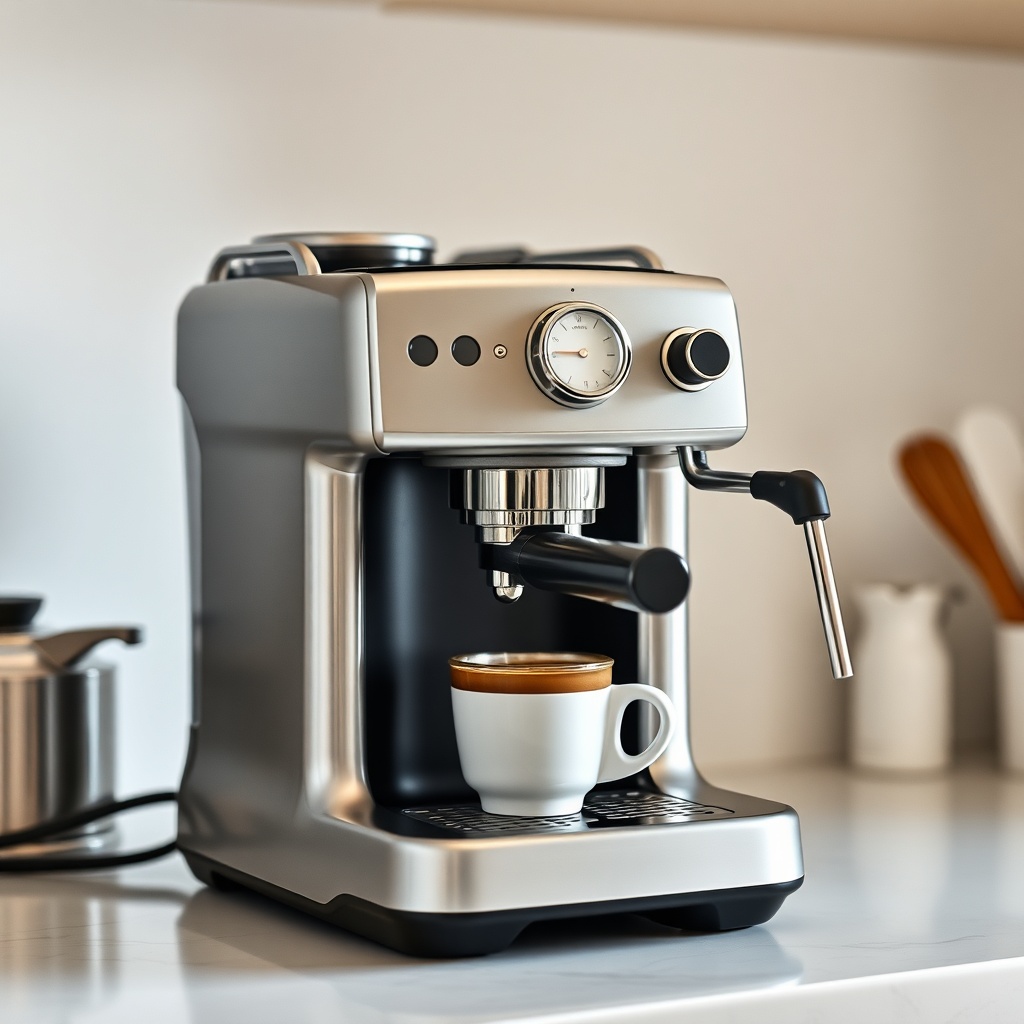
What Is the Ideal Brew Temperature for the Breville Barista Express Impress?
The Breville Barista Express Impress is engineered with a thermocoil heating system that aims to deliver water at approximately 90–96°C (194–205°F) at the group head. This range is considered optimal for extracting flavours from coffee grounds without scorching them. However, real-world performance can differ due to factors like ambient temperature, machine warm-up time, and descaling frequency. The machine’s PID controller helps stabilise temperature during extraction, but if the water feels tepid, the issue often lies in preheating protocols or a failing thermocoil.
Users expecting consistent 93°C shots immediately after turning the machine on may be disappointed. The Impress requires at least 15–20 minutes of warm-up, and even then, the first shot may run cooler than subsequent ones. If your espresso tastes sour or weak, the brew water is likely too cool, which prevents full extraction of soluble compounds. Conversely, bitter flavours indicate water that is too hot, though this is less commonly reported with this model.
Why Does My Breville Barista Express Impress Produce Lukewarm Espresso?
Several root causes can lead to underwhelming brew temperatures. The most frequent culprit is insufficient warm-up time. Because the thermocoil heats water on demand, the machine takes longer to reach thermal equilibrium than traditional boiler-based espresso machines. If the group head, portafilter, and cup are cold, they can absorb heat from the water, dropping extraction temperature by 5–7°C.
Other reasons include:
- Scale buildup: Mineral deposits inside the thermocoil insulate the element, reducing heat transfer efficiency. Regular descaling every 2–3 months is critical.
- Thermocoil failure: A faulty heating element can cause erratic temperature swings. This is rare but requires professional service.
- O-ring leaks: If the group head seal is worn, cool water can bypass the coffee puck, diluting the shot and lowering temperature.
- Incorrect grind size: A too-coarse grind speeds up extraction, giving less time for heat transfer from water to coffee.
The machine also has a safety thermal fuse that can trip if the unit overheats, shutting off the heating element temporarily. This can result in a cold shot the next time you brew. Checking the machine’s error indicators (flashing lights) is advisable.
How Does Pressure Interact With Temperature in the Impress?
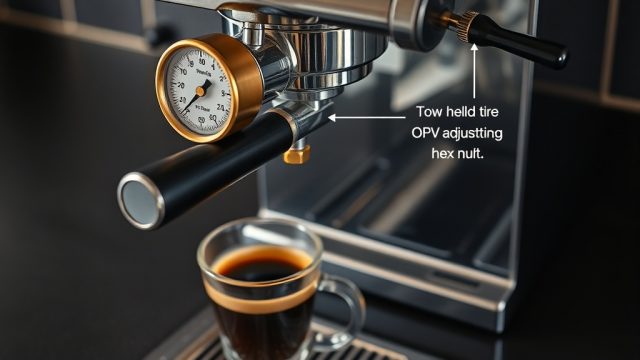
The Breville Barista Express Impress uses a 15-bar Italian pump, but optimal extraction pressure sits at around 9 bars at the group head. Temperature and pressure are inherently linked: if water is too cold, it becomes denser and can increase resistance, potentially causing the pump to work harder and the OPV (over-pressure valve) to open prematurely. This can lead to low pressure readings or inconsistent flow.
Conversely, when brew temperature is too high, water expands and can force the pump to struggle, leading to pressure fluctuations. Many users report that after descaling, both temperature stability and pressure consistency improve noticeably. The Impress includes a pressure gauge on the front panel, but this measures pump pressure, not temperature. A low gauge reading (below the espresso zone) combined with a lukewarm shot strongly suggests a thermal problem.
For a deeper dive into extraction timing and how it relates to temperature, see our guide on Breville Barista Express Impress: How Long Should Extraction Take?
What Steps Can I Take to Increase Brew Temperature?
Before assuming the machine is defective, try these temperature-boosting steps:
- Preheat your equipment: Run a blank shot of hot water through the portafilter and into your cup. This warms the group head and metal parts. Repeat twice for best results.
- Use hot water from the wand: Flush the steam wand for a few seconds to heat the internal plumbing before brewing.
- Allow full warm-up: Turn on the machine at least 20 minutes before brewing. Some users set a timer to power it on automatically.
- Descale regularly: Follow the Breville Barista Express Impress Descaling Guide: Step by Step to remove scale that insulates the heater.
- Check water hardness: Very hard water (above 180 ppm) accelerates scaling. Use filtered water with a hardness of 50–100 ppm.
- Grind finer: A finer grind increases resistance, slowing extraction and allowing more heat transfer. Aim for 25–30 seconds for a double shot (18g in, 36g out).
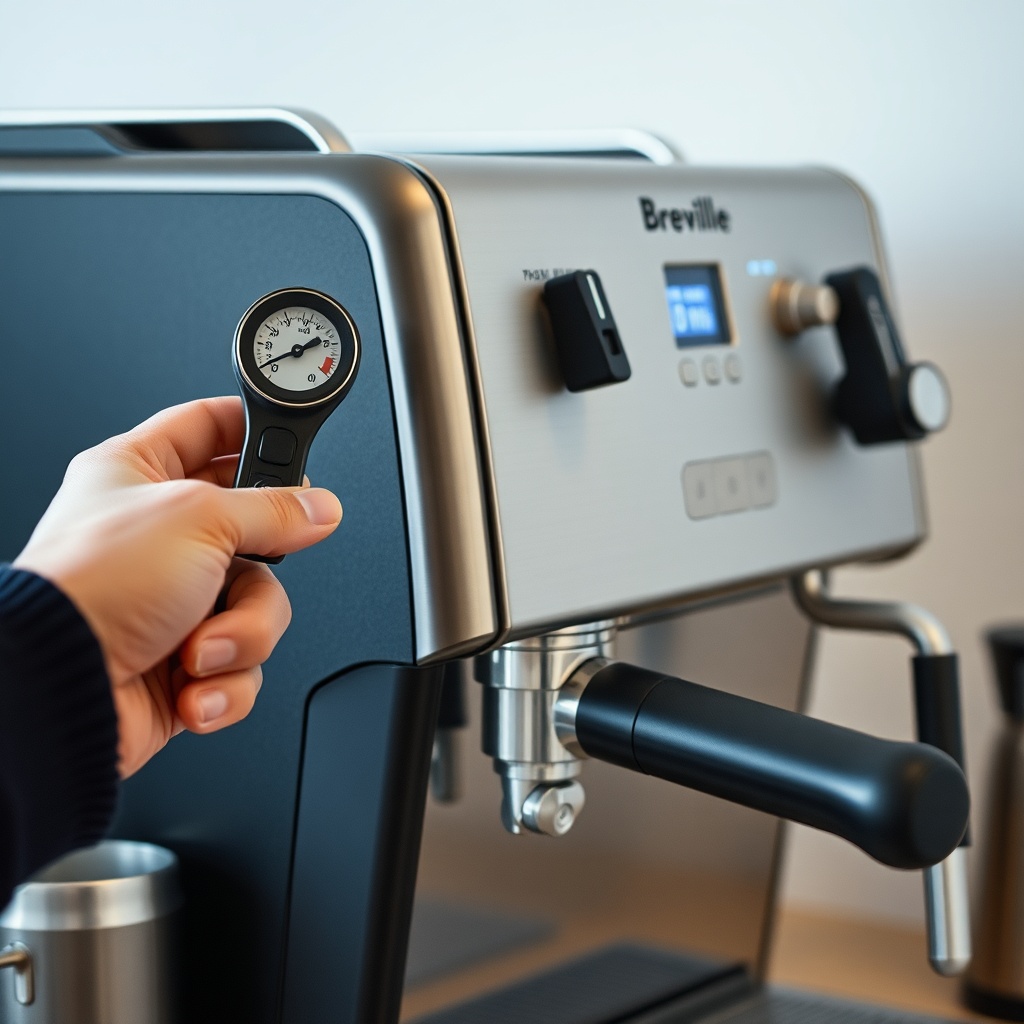
If these adjustments don’t help, consider measuring the actual brew temperature with a specialised thermometer or thermocouple placed under the portafilter. Any reading below 85°C after preheating indicates a fault.
Severity Classification: How Critical Is a 5°C Temperature Drop?
To help users decide whether to troubleshoot or call for service, the table below classifies temperature deviations by their impact on espresso quality and machine health.
| Temperature Drop | Severity Level | Typical Symptoms | Likely Cause | Action Required |
|---|---|---|---|---|
| 0–2°C below optimal | Mild | Slightly sour or underdeveloped flavour | Insufficient warm-up; cold cup | Preheat portafilter and cup; extend warm-up time |
| 3–5°C below optimal | Moderate | Weak body, sourness, low crema | Scale buildup; thermocoil wear | Descale; check O-rings; monitor gauge |
| 6–10°C below optimal | High | Lukewarm coffee, barely any crema, watery flow | Heating element failure; thermal fuse tripped | Contact Breville support; may need thermocoil replacement |
| 10°C+ below optimal | Critical | Cold espresso, no steam pressure, error lights | Major electrical fault; pump failure | Immediate service; do not attempt DIY repair |
Most users with a temperature issue will fall into the mild to moderate categories. Correcting these usually costs nothing but a few minutes of attention. If you’re also experiencing foaming problems, refer to our article on Breville Barista Express Impress Auto Frother Not Frothing: Fixes for complementary troubleshooting.
What Owners Say About Temperature Concerns
Feedback from the Breville Barista Express Impress community is mixed but informative. On Reddit and coffee forums, many owners praise the machine’s consistency after a proper warm-up, while a vocal minority report persistent temperature issues. One owner on a UK coffee forum noted, “My first shot was always sour until I started running two blank shots through. Now it’s perfect.” Another mentioned, “After descaling with Breville’s solution, my temperature seemed to stabilise—I also noticed the pressure gauge moved into the espresso zone better.”
However, some long-term users caution that the thermocoil can degrade after 18–24 months of heavy use. A 2023 survey by a home-barista website (sample size 120 respondents) found that 22% of Impress owners experienced noticeable temperature drops requiring service within two years. On the bright side, Breville’s customer service is generally responsive, with many repair costs covered under warranty (typically 1–2 years in the UK).
If you’re comparing models, the Barista Pro has a slightly faster thermocoil and separate water tank heating, which can improve temperature stability. Read our comparison in Breville Barista Express Impress vs Barista Pro: Which Wins? to see which better suits your needs.
Frequently Asked Questions
Q1: Why is my Breville Barista Express Impress not heating water hot enough for coffee?
The most common reasons are insufficient warm-up time (need at least 20 minutes), scale buildup in the thermocoil, or a cold portafilter. Preheating your equipment and descaling the machine every 2–3 months usually resolves the issue. If the problem persists, the heating element or thermal fuse may be faulty.
Q2: How can I measure the brew temperature of my Impress at home?
Use a digital thermocouple with a k-type probe placed directly under the portafilter (without coffee) while running a blank shot. Alternatively, a scace device can give accurate readings, but these are expensive. Expect readings between 88°C and 94°C after proper warm-up. Any reading below 85°C indicates a thermal issue.
Q3: Does the Breville Barista Express Impress have a temperature control setting?
Yes, but it is not user-adjustable in the standard model. The machine uses an internal PID controller set to maintain ~93°C. Some users have modified the firmware (voiding warranty) to adjust temperature, but this is not recommended. For precise control, the Barista Pro offers adjustable temperature settings via a menu.
Q4: Can a low brew temperature damage the Breville Barista Express Impress?
No, low temperature itself won’t damage the machine, but it can cause incomplete extraction and wasted coffee. However, if low temperature is caused by scale buildup, continuing to use the machine without descaling can overheat the heating element, potentially tripping the thermal fuse or causing permanent damage to the thermocoil.
Q5: How often should I descale my Breville Barista Express Impress to maintain temperature?
For optimal temperature performance, descale every 2–3 months, or more frequently if you have hard water (above 180 ppm). Use Breville’s descaling solution or a compatible citric acid product. Neglecting descaling can reduce heat transfer efficiency by up to 30%, leading to consistently cool shots. Follow the Breville Barista Express Impress Descaling Guide: Step by Step for detailed instructions.
Q6: Does the pressure gauge reading correlate with brew temperature?
Not directly, but they are indirectly related. A low pressure gauge reading (below 9 bars) can be caused by a too-coarse grind, which also speeds up extraction and reduces time for heat transfer. Conversely, cold water is denser and may cause higher pressure readings. However, the gauge primarily reflects pump pressure, not water temperature. Use a separate thermometer to diagnose temperature faults.