Why Does My BrewWise Thermoblock Need a Backflush?
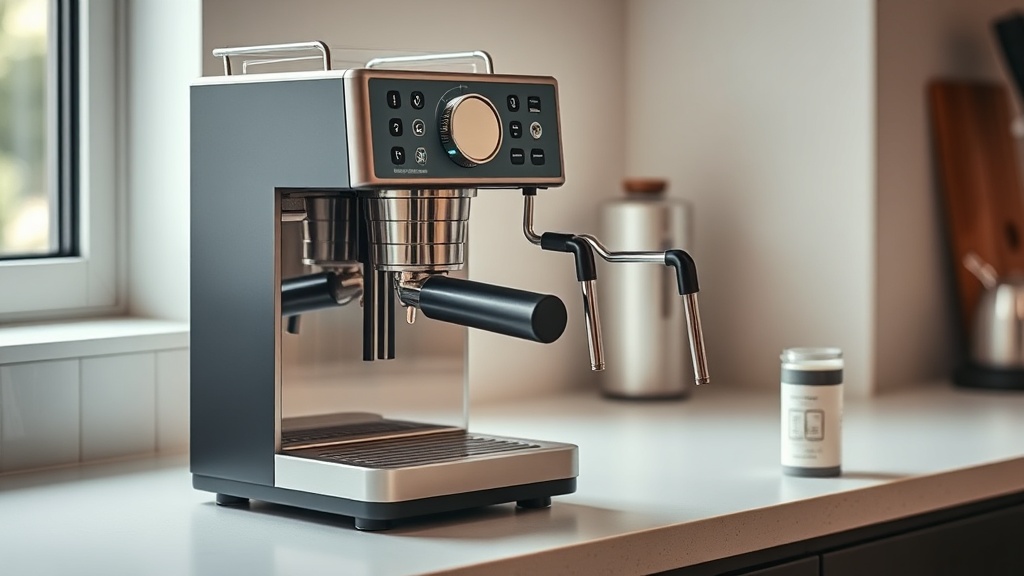
The BrewWise Thermoblock is a precision espresso machine, but even the best engineering can’t prevent coffee oil buildup. Over time, fine coffee particles and oils accumulate in the brew group and thermoblock pathway, leading to stale flavours and slower extraction. Backflushing is the single most effective method to remove these residues, restoring your machine’s thermal efficiency and shot quality.
By performing a backflush every 20 to 30 shots (or weekly for heavy use), you keep the group head, dispersion screen, and three‑way valve free from rancid oils. The process forces water backward through the brew circuit, dislodging grinds and residue that a simple rinse cannot reach. For owners who value consistent espresso, this routine is non‑negotiable — it directly affects water flow, temperature stability, and crema production.
Many users overlook backflushing because it sounds technical, but with the correct tools and sequence, it takes under five minutes. This guide walks you through each step, using genuine BrewWise cleaning products and a blind filter basket. If you’ve noticed a bitter aftertaste or uneven flow from your group head, a backflush will likely solve the issue before any mechanical repair is needed.
What Do I Need for BrewWise Thermoblock Backflushing?
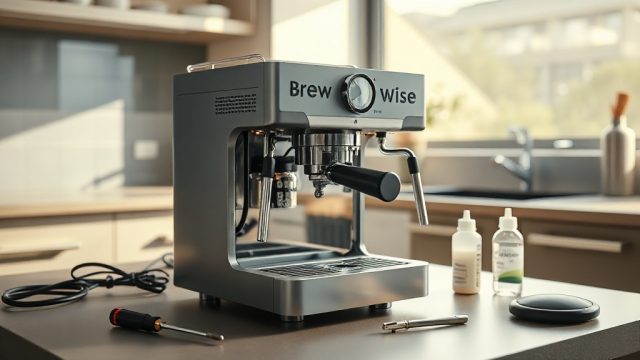
Before you start, gather the correct supplies. Using the wrong cleaning agent or tool can damage the thermoblock’s internal seals and O‑rings. Only use a mild, espresso‑machine‑specific cleaning powder — never dish soap or descaler during backflushing.
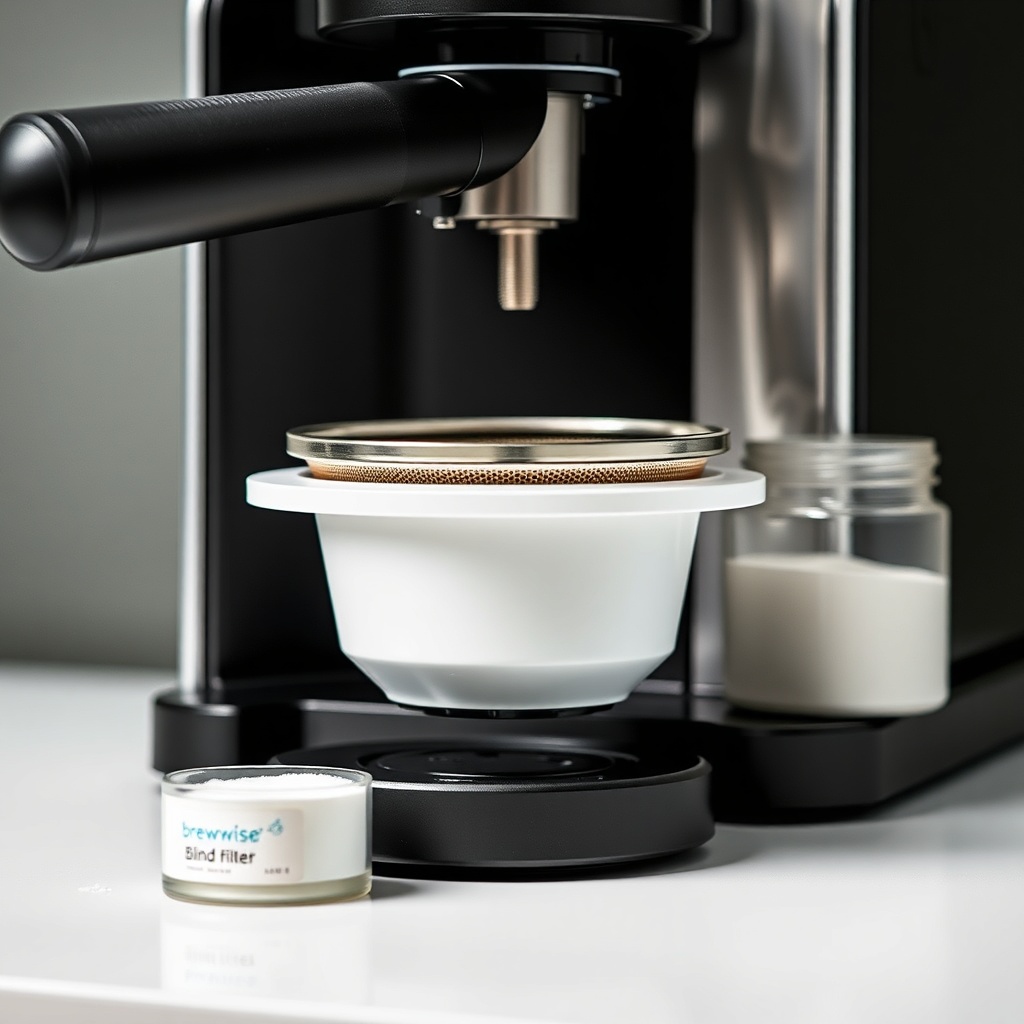
- Blind filter basket: This solid, non‑perforated basket fits into your portafilter and blocks water flow, forcing it backward. The BrewWise Thermoblock ships with one in the accessory box; if missing, order a genuine 58mm blind basket.
- Cleaning powder or tablet: BrewWise recommends their branded backflush detergent (typically containing sodium carbonate and surfactants). One packet costs approximately £4.99 for a 10‑pack.
- Empty drip tray: The backflush process discharges dirty water, so your drip tray must be empty and clean beforehand.
- Soft cloth: For wiping the group head after the cycle.
| Tool | Purpose | Cost Range (GBP) | Frequency of Replacement |
|---|---|---|---|
| Blind filter basket (58mm) | Blocks water flow for backflush | £7.99 – £14.99 | Replace if bent or worn seals |
| Cleaning powder (10‑pack) | Dissolves coffee oils and residues | £4.99 – £8.49 | One packet per backflush |
| Soft nylon brush | Scrubs dispersion screen (optional) | £3.50 – £6.99 | Every 6 months |
| Silicone gasket seal | Replaces worn group head seal | £5.99 – £8.99 | Every 12 months |
If your blind basket is lost or damaged, consider pairing the backflush with a group gasket replacement to ensure a watertight seal. Cheap aftermarket baskets may leak, so stick to genuine BrewWise parts for the best results.
How Do I Prepare the BrewWise Thermoblock for a Backflush?
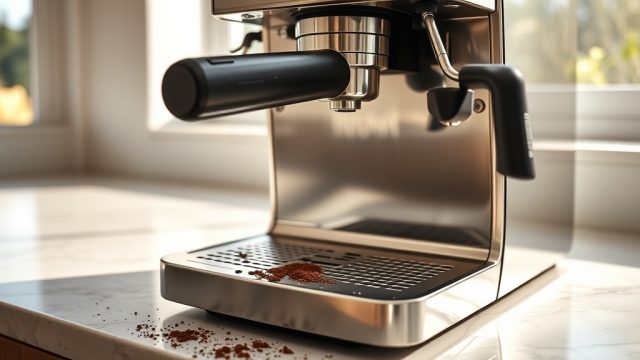
Preparation is straightforward but critical. Start by switching off the machine and allowing it to cool for about 15 minutes — a hot machine can cause cleaning powder to foam aggressively and overflow the group head. While waiting, empty the drip tray and wipe any loose coffee grounds from the drip tray grid.
- Remove the stock portafilter basket and replace it with the blind filter basket. Ensure it clicks firmly into the portafilter ears.
- Place precisely one teaspoon (about 3 grams) of BrewWise cleaning powder into the blind basket. Do not overfill — excess granules can clog the three‑way valve.
- Lock the portafilter onto the group head firmly but not forcefully. You should feel light resistance as the gasket compresses.
- Position an empty mug or container under the group head to catch any water that drips during the cycle.
If you live in a hard‑water area, you may notice white scale in the group head screen. Backflushing will not remove scale — that requires a separate descaling cycle. Review our water hardness optimisation guide for long‑term maintenance. For most users, a weekly backflush combined with filtered water (see built-in filtration vs. Brita) dramatically extends component life.
What Is the Correct BrewWise Thermoblock Backflush Cycle?
The backflush procedure uses the machine’s pump and three‑way valve to circulate cleaning solution. BrewWise Thermoblock models typically include a dedicated “Backflush” button or a manual sequence: start and stop the brew cycle repeatedly (10 seconds on, 10 seconds off) for about 60 seconds. Here is the exact step-by-step:
- Step 1: Press the backflush button or start the brew cycle manually. After 10 seconds of water flow, stop the cycle. You will hear a gurgle as the three‑way valve releases pressure — that is normal.
- Step 2: Wait 10 seconds for the solution to soak the oils, then start again. Repeat this start/stop pattern five to six times.
- Step 3: Allow the machine to sit for 30 seconds with the cleaning solution inside the group head — this dwell time lifts stubborn residue.
- Step 4: Remove the portafilter, discard the dirty water in the drip tray, and rinse the blind basket under hot tap water.
- Step 5: Reattach the blind basket (empty, no powder) and run three complete “rinse” cycles by starting and stopping the pump as before. This flushes leftover detergent from the thermoblock and pipes.
After the final rinse, the water coming from the group head should be clear and taste free of any chemical bitterness. If not, repeat the rinse cycles. A clean BrewWise Thermoblock will produce a steady, golden‑brown flow — not a sputtering or channelled stream.
For machines used commercially or for more than ten shots daily, repeat the entire three‑step cycle (dose, scrub, rinse) twice per session. Home users typically need only one full cycle. If you notice a persistent foul smell, the three‑way valve may need a deeper clean; this is where auto frother issues often originate.
How Often Should I Backflush the BrewWise Thermoblock?
Frequency depends entirely on usage volume. For a typical home user pulling two to four shots daily, a backflush every week (or after 20 shots) keeps the group head clean. Heavy users (six or more shots per day) should backflush every third day. Commercial establishments with continuous operation should backflush after each batch or at least once per shift.
Signs that you have waited too long include: a bitter or “ashy” aftertaste in shots, slow or uneven flow from the group head, visible coffee slime on the dispersion screen, and reduced steam power from the frother (linked to common frother failures). If any of these appear, perform an immediate backflush — do not wait until a scheduled date.
An often‑overlooked factor is water quality. Machines used with softened or reverse‑osmosis water may still need backflushing at the same intervals because coffee oils do not dissolve in pure water. However, poor water chemistry can accelerate scale, which masks as oil buildup. Check your machine’s water hardness using a test strip; if it exceeds 120 ppm, consider filtration solutions (compare filtration options).
What Owners Say About Backflushing the BrewWise Thermoblock
Experienced BrewWise Thermoblock owners consistently report dramatic improvements in shot consistency after mastering the backflush routine. On home‑barista forums, users highlight that the first backflush after purchase often yields dark, oily discharge — a clear sign of manufacturing residue or old coffee oils. “I was shocked at the gunk that came out,” writes one owner from Manchester. “My shots went from sour to perfectly balanced within one cleaning.”
Another common observation is that neglected backflushing leads to erratic brew pressure. One London‑based user tracked his group head temperature with a Scace device and found a 2°C drop after three weeks without backflushing — enough to ruin a light‑roast espresso. After a proper backflush, temperature stability returned to ±0.5°C. Owners also note that steam wand performance improves because the thermoblock can heat water more efficiently when unobstructed by oil.
Several seasoned owners recommend pairing backflushing with periodic pressurestat adjustment to maintain optimal brew pressure. They emphasise that backflushing alone cannot fix mechanical drift, but it does prevent pressure loss caused by clogged pathways. The consensus is clear: a backflush‑ready machine yields 85‑90% of the espresso quality of a brand‑new unit, even after years of use.
Frequently Asked Questions
Q1: Can I use descaling solution instead of backflush powder?
A: No. Descaling solution is acidic and attacks coffee oils differently. Using it for backflushing can degrade the group head gasket and three‑way valve seals. Use only a dedicated espresso cleaner (sodium carbonate‑based).
Q2: My BrewWise Thermoblock doesn’t have a backflush button. What do I do?
A: Most models with a manual brew switch can be backflushed by cycling the switch on for 10 seconds, off for 10 seconds, repeated 5–6 times. Check your manual; some units require pressing the steam button to activate a “clean” cycle.
Q3: How do I know if I backflushed long enough?
A: After the final rinse, water from the group head should run clear and taste neutral. If you see foam or smell detergent, rerinse. A good rule: the total cleaning time (including dwell) should be at least 90 seconds.
Q4: Can I backflush with the portafilter locked too tightly?
A: Yes — excessive force can crush the gasket or warp the blind basket. Lock the portafilter until you feel moderate resistance; it should not require a wrench. Replace the gasket if it leaks during backflush (see gasket replacement guide).
Q5: Will backflushing remove scale from the thermoblock?
A: No. Backflushing only removes coffee oils and loose particles. Hard water scale requires a separate descaling procedure (typically citric acid or a commercial descaler run through the water tank). Ignoring scale can damage the thermoblock permanently.
Q6: Do I need to backflush the steam wand too?
A: No. The steam wand has a separate circuit. However, purging the wand after each use and wiping with a damp cloth prevents milk deposits. If your auto frother stops working, it is likely a separate issue — check our auto frother fixes.