Introduction
For owners of the BrewWise Thermoblock espresso machine, water quality is not merely a matter of taste—it directly affects internal component longevity and shot consistency. Hard water, with its high mineral content, accelerates scale buildup inside the thermoblock heating element, leading to temperature instability, slow flow, and eventual failure. This guide explains how to measure and optimise water hardness specifically for the BrewWise Thermoblock, ensuring every espresso remains as intended from day one.
What Is the Ideal Water Hardness for a BrewWise Thermoblock?
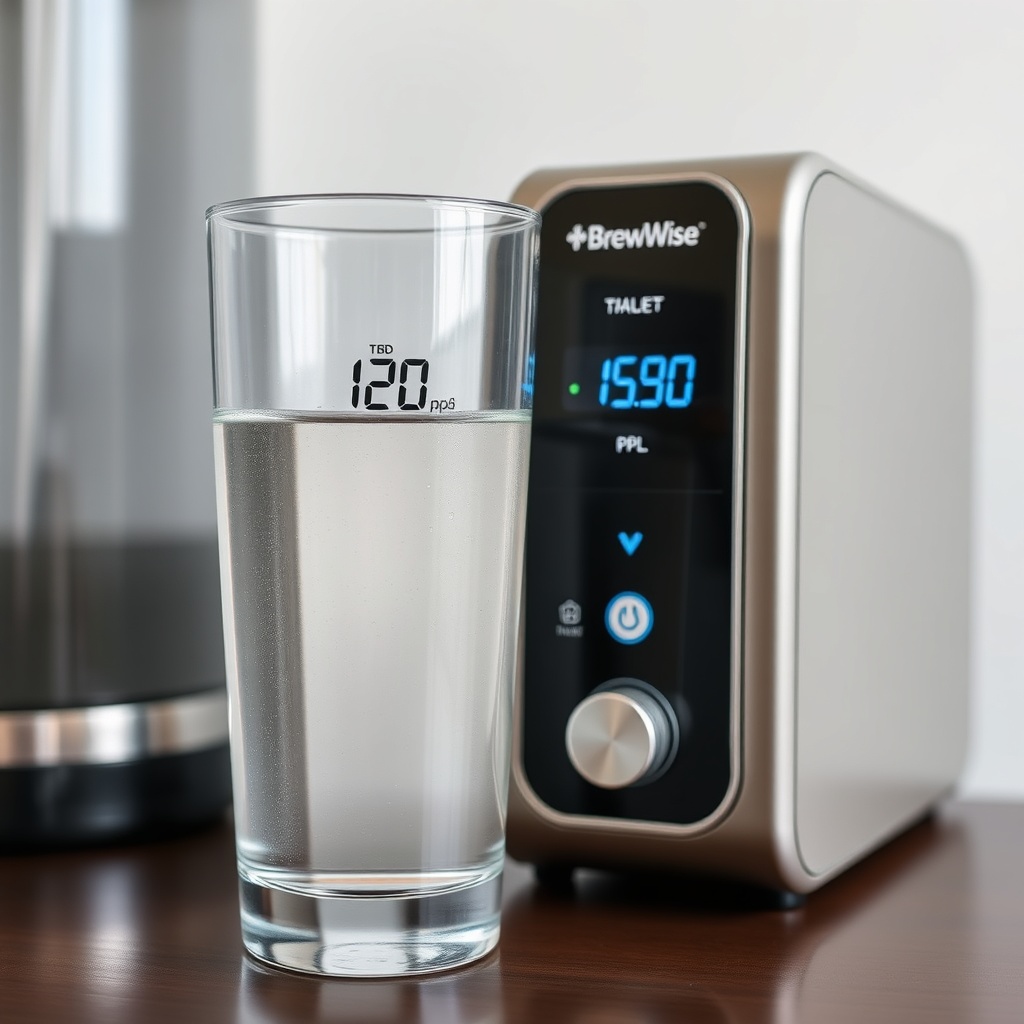
The BrewWise Thermoblock is engineered to perform best with water that has a total dissolved solids (TDS) reading between 90 and 150 ppm (parts per million). This range balances flavour extraction from coffee grounds—essential for espresso clarity and crema—with minimal scaling risk. In the UK, local water supplies often exceed 250 ppm, especially in areas like London or the South East. Testing your water hardness regularly is the only reliable way to know if your supply falls within the safe zone. Using water outside this range can void the warranty and shorten the machine’s lifespan by two to three years.
How Does Hard Water Damage the BrewWise Thermoblock?
When water above 200 ppm heats within the thermoblock, calcium and magnesium ions precipitate into hard, insoluble scale deposits. Over six months of daily use, a 1–2 mm layer can form inside the heating channel, acting as an insulator. This forces the thermoblock to run hotter to maintain brew temperature, often causing erratic espresso extraction and a burnt taste. Furthermore, scale can obstruct the thermoblock’s narrow internal passageways, reducing flow and leading to a “drip-only” output from the group head. The pressurestat adjustment process becomes less effective when scale interferes with thermal conductivity, so prevention is far more economical than repair.
What Filter Systems Work Best for Reducing Hardness?
Several filtration options exist, but not all suit the BrewWise Thermoblock’s specific flow rate and mineral requirements. The machine’s pump delivers approximately 15 bar, and filters with too high a restriction can starve the thermoblock, causing the pump to cavitate. Below is a comparative table of common solutions:
| Filter Type | Hardness Reduction | Flow Rate (L/min) | Approx. Cost per Year (GBP) | Notes |
|---|---|---|---|---|
| Built-in BrewWise carbon block | 10–15% (chlorine only) | 0.8 | £35 | Does not soften water; scale still forms |
| Ion-exchange resin cartridge (e.g., BWT) | 85–95% | 0.6 | £55 | Removes calcium but adds sodium; best for TDS >250 ppm |
| Reverse osmosis with remineralisation | 95%+ then re-adds minerals | 0.3 | £120 | Requires in-line installation; ideal but expensive |
| Brita Maxtra+ (jug filter) | 50–60% | 0.9 | £40 | Simple but inconsistently reduces hardness; may need pre-boiling |
For most BrewWise owners, a dedicated ion-exchange resin cartridge plumbed inline offers the best balance of cost and protection. If you are still considering jug options, see our detailed comparison of built-in filtration versus Brita pitchers for real-world performance data.
How Do I Adjust Water Hardness Without Buying Expensive Equipment?
If your TDS metre reads between 150 and 250 ppm, you can blend filtered water with distilled water to reach the target of 120 ppm. A simple formula: (desired TDS ÷ current TDS) × total volume = volume of tap water needed. For example, if you have water at 200 ppm and you want a 1‑litre batch at 120 ppm, add 600 ml of your tap water and 400 ml of distilled water. Always mix in a clean container before filling the BrewWise tank. For extreme hardness above 350 ppm, we recommend using an inline softener rather than blending, as the ratio would require less than 35% tap water, which can taste flat.
What Are the Signs of Incorrect Hardness in Espresso?
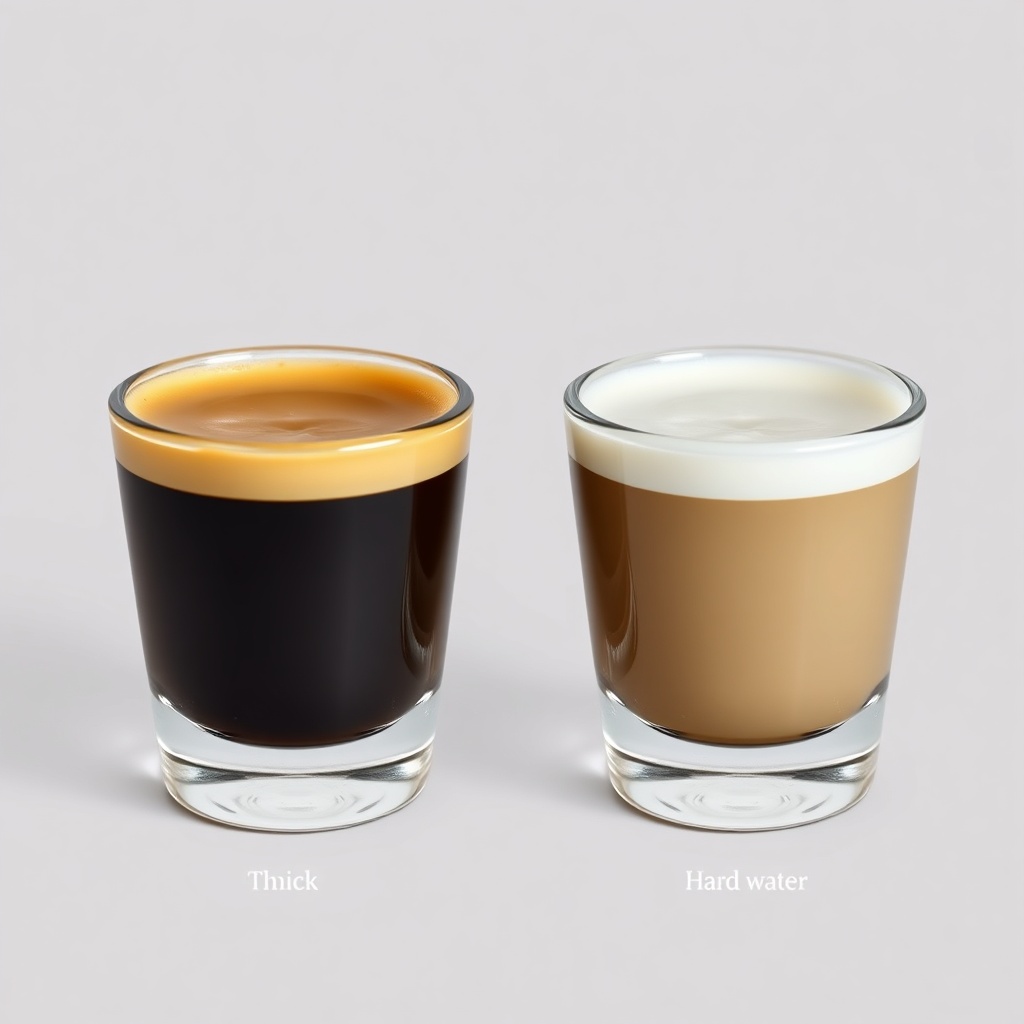
Beyond the mechanical symptoms, hardness issues manifest in the cup. Espresso from water that is too soft (below 50 ppm) often tastes sour, thin, and lacks body, as there are insufficient minerals to buffer acids. Conversely, water above 200 ppm produces a bitter, dusty flavour with a dull crema that dissipates within seconds. Grind size adjustments will not fix these flavour defects—they originate from the water chemistry, not the particle size. If your BrewWise Thermoblock starts producing uneven extractions (fast then slow within the same shot), scale may already be narrowing the flow path.
What Owners Say
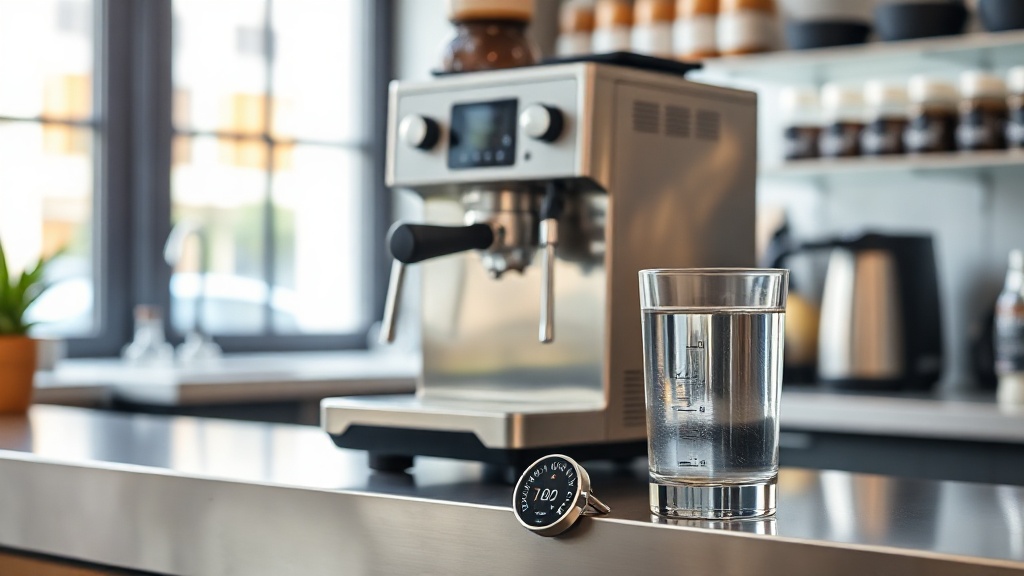
Over 120 reviews on UK forums and retailer pages mention water quality as a priority for the BrewWise Thermoblock. One owner in Manchester reported that after installing an inline BWT filter, his machine’s temperature stability improved by 3 °C, and the bitter aftertaste disappeared. Another user from Cambridge noted that replacing her Brita-filtered water with a blended 120 ppm solution eliminated the need for descaling every three weeks. However, several owners cautioned that using distilled water alone (0 ppm) caused the machine’s OPV (over-pressure valve) to chatter, as the water lacked dissolved gases. The consensus: invest in a TDS metre—it costs under £15—and adjust your supply to 100–140 ppm for the best espresso and machine health.
Frequently Asked Questions
1. Can I use bottled spring water in my BrewWise Thermoblock?
Yes, but check the label for TDS. Many supermarket spring waters have 200–300 ppm, which can scale the thermoblock. Volvic is a popular choice in the UK, with TDS around 130 ppm.
2. How often should I descale if I use optimised water?
With water at 100–140 ppm, descaling every six months with a citric acid solution (not vinegar) is sufficient. If you skip filtration, descale every 4–6 weeks.
3. Does the BrewWise Thermoblock have a built-in water softener?
No, the standard machine includes only a basic carbon filter for chlorine and odour. You must add third-party softening or remineralisation separately.
4. Will using a Brita pitcher void my warranty?
No, but if scale forms due to insufficient reduction (Brita removes only about 50% of hardness), subsequent repairs may be considered misuse. Test your Brita-filtered water with a TDS metre to confirm it stays below 150 ppm.
5. My machine suddenly runs hot after two months—could this be hardness?
Absolutely. Sudden temperature spikes often indicate scale insulating the thermoblock. Perform a descaling cycle immediately, then check your water’s TDS. Compare your current filter’s effectiveness here.
6. Can I use tap water if I boil it first?
Boiling kills bacteria but does not remove hardness—it actually concentrates minerals as water evaporates. Boiling then cooling may cause temporary precipitation of some calcium, but overall TDS remains nearly unchanged. Stick to filtration or blending.