BrewWise Thermoblock: How to Test Water Hardness for Optimal Performance
Water hardness is one of the most overlooked variables in espresso quality, yet it directly impacts the longevity and flavour output of your BrewWise Thermoblock. Testing and adjusting water hardness ensures consistent thermal stability, reduces scaling risks, and protects the heating element from premature failure. This guide explains the how, when and why of water hardness testing for your machine, with practical steps and product recommendations.
What water hardness level is recommended for a BrewWise Thermoblock?
The ideal water hardness range for a BrewWise Thermoblock is between 50 and 120 parts per million (ppm) of total dissolved solids (TDS), or roughly 3–7 grains per gallon (gpg). This soft-to-moderate hardness balances mineral content for flavour extraction without encouraging rapid scale buildup inside the thermoblock’s narrow heating channels. Water below 50 ppm may lack the buffering capacity for proper extraction, while water above 120 ppm accelerates limescale formation, reducing heat transfer efficiency and increasing the risk of overheating.
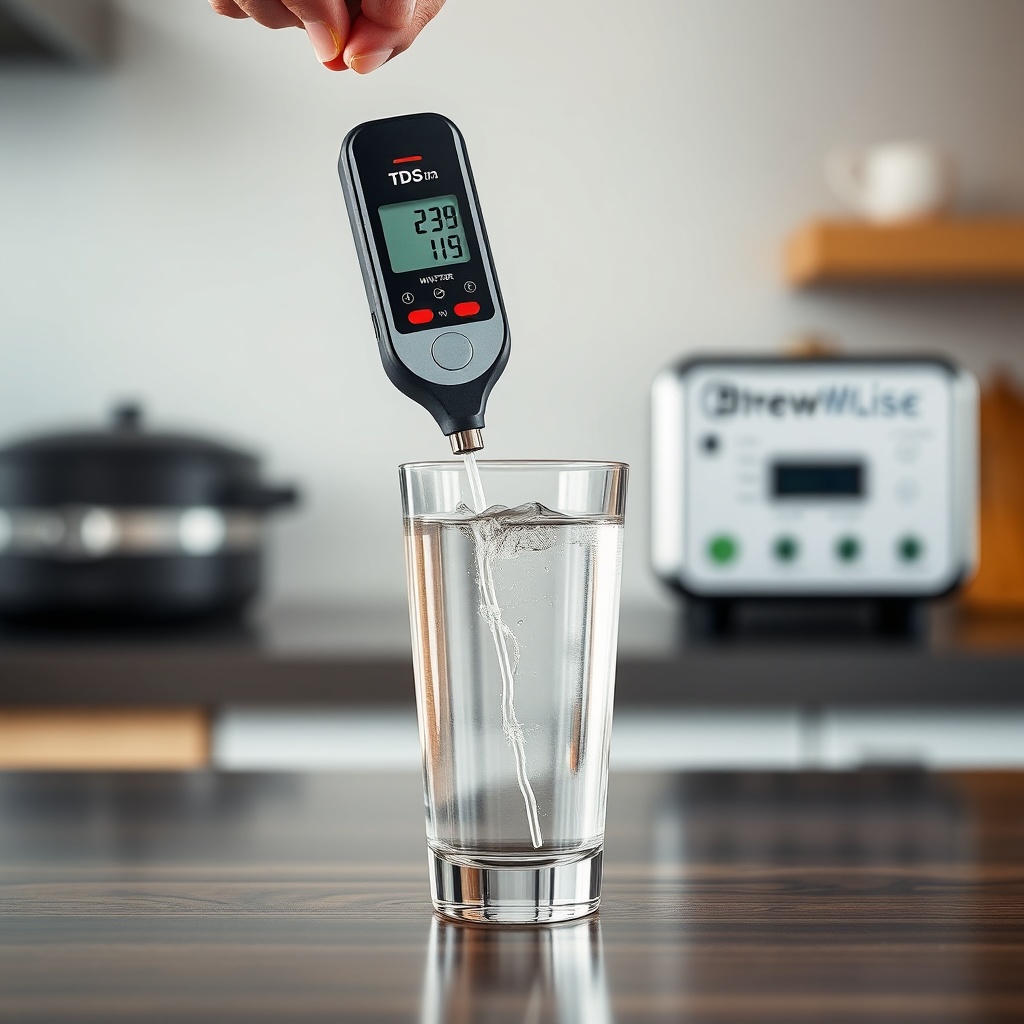
Testing your water with a reliable TDS meter or hardness test strip is the first step to confirming whether your supply falls within this window. Many tap water supplies in the UK read 200–300 ppm, which is too hard for a thermoblock espresso machine without filtration or softening.
How can I test water hardness at home without a kit?
If you do not have a dedicated water hardness test kit, a few household indicators can give you a rough estimate. Soap lather test: fill a clean bottle with 50 ml of tap water, add a drop of liquid soap, shake for 10 seconds. If the water turns milky with minimal lather, it’s likely hard (150+ ppm). If it lathers easily and remains clear, it’s soft (below 100 ppm). Another quick gauge is to check for white residue around kettle elements or on glassware after boiling – heavy scaling suggests hard water.
These DIY methods are not precise enough for dialling in a thermoblock. For accurate testing, invest in a water filtration system with a built-in TDS meter, or purchase a £15 electronic TDS meter from a coffee equipment supplier. This small investment saves potential repair costs. Common household test strips from aquarium or water softener suppliers also work; look for ones that measure in 50 ppm increments.
What happens if I use water that is too hard for too long?
Hard water causes scale to crystallise inside the BrewWise Thermoblock’s heating chamber and narrow internal tubing. Scale acts as an insulator, meaning the thermoblock must run hotter and longer to reach the target temperature. This increases thermal stress on the thermostat and heating element, leading to two frequent failure modes: temperature fluctuation and eventual thermostat failure. Users who ignore hard water often see extraction times drift after six to eight months, with the machine struggling to hold a stable temperature during a shot.
Severe scaling can block water flow entirely, causing the thermoblock to overheat and trip the thermal fuse – a repair that often costs £100–150 at a service centre. To illustrate the relationship between water hardness and scale severity, refer to the table below.
| Hardness (ppm) | Classification | Scale Risk Level | Recommended Action |
|---|---|---|---|
| 0–50 | Very Soft | Low | Consider mineral additive for flavour |
| 51–120 | Soft to Moderate | Low to Moderate | Ideal range; descale every 3 months |
| 121–200 | Hard | High | Use filtration or softener; descale monthly |
| 200+ | Very Hard | Very High | Risk of thermostat failure; descale every 2 weeks |
What is the best way to reduce water hardness for my thermoblock?
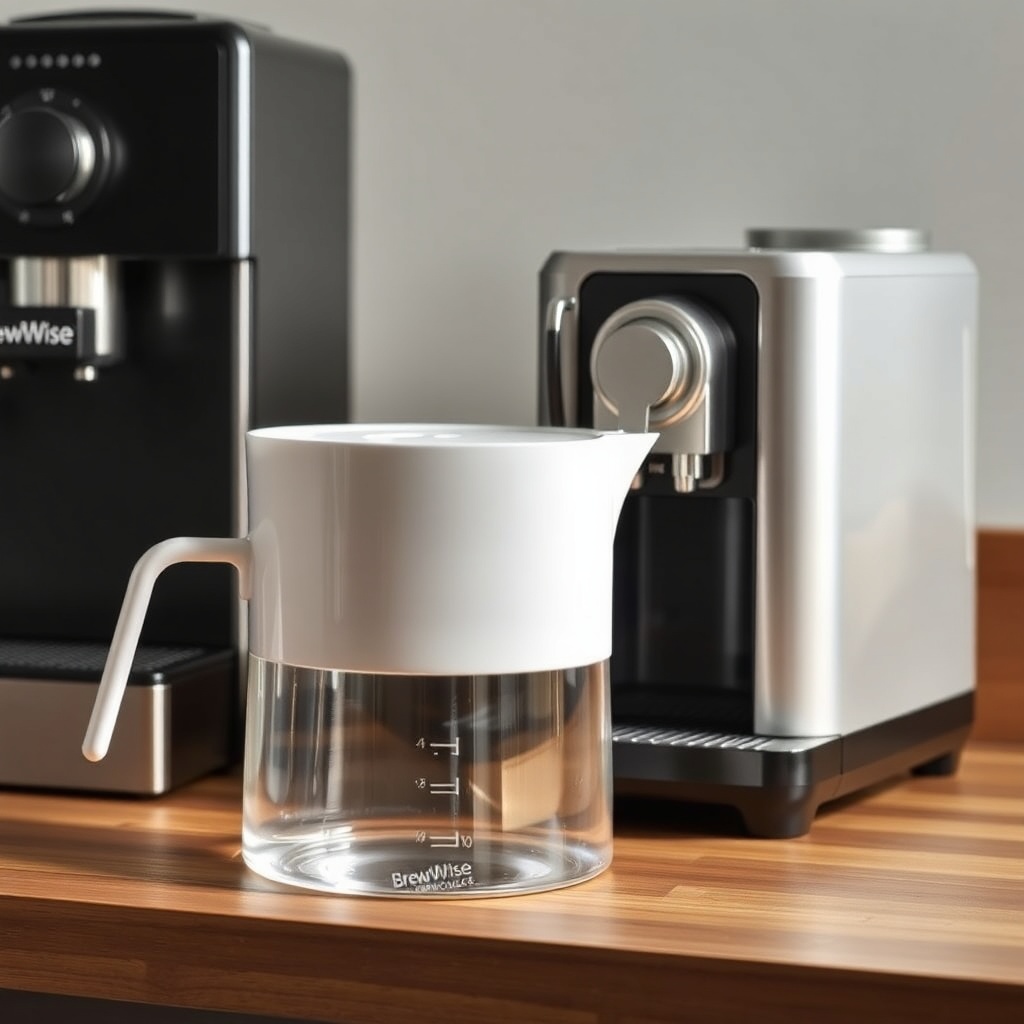
The most effective method for a BrewWise Thermoblock is to use a dedicated water filtration pitcher or inline filter that reduces hardness without completely stripping minerals. Products like the Brita Purity C150 or a BWT Bestmax Premium filter reduce hardness to around 80–100 ppm while retaining some magnesium and calcium for taste. Avoid reverse osmosis (RO) without remineralisation, as RO water below 20 ppm can lead to metallic taste extraction and potential corrosion of the thermoblock’s brass or aluminium parts over time.
For budget-conscious users, a simple water softener resin filter (e.g., a 10-inch inline cartridge at £25) installed before the machine’s water inlet works well. Alternatively, mix 50% distilled water with 50% filtered tap water to hit the target range. Whichever method you choose, test the output water monthly with a TDS meter to confirm it stays between 50–120 ppm. This practice also helps you decide when to increase descaling frequency before scale becomes critical.
How often should I test water hardness for my BrewWise Thermoblock?
Test your water hardness at least once per month if you use tap water, or every three months if you use filtered water from a verified source. Seasonal changes in municipal water supplies can shift hardness by 30–50 ppm – for example, summer months often bring harder water due to less rainfall dilution. If you notice any of these symptoms: inconsistent extraction time, steam wand sputtering, or unusual noise from the thermoblock, test immediately. Hardness changes can manifest before visible scale appears on the drip tray.
Keep a log of your TDS readings and descaling dates. Many users find that once they stabilise their water hardness to the recommended range, their machine’s thermal stability improves markedly, and they can extend intervals between deep cleans. For espresso enthusiasts who adjust grinder settings for fine-tuning shots, consistent water chemistry is as important as bean freshness for reproducibility.
What do owners say about water hardness management with the BrewWise Thermoblock?
Owners who consistently test and manage water hardness report noticeably longer machine life and better shot consistency. One long-term user in a hard-water area (280 ppm tap) shared on a home-barista forum that after installing a £40 inline softener and testing monthly, his BrewWise Thermoblock required only one descaling in two years, whereas previously he needed descaling every three months and replaced a thermostat at the 18-month mark. Another owner from Manchester noted that after switching to a Brita filtered water jug and testing weekly for the first month, his extraction times stabilised within one second shot-to-shot, compared to a three-second variance before.
Common praise includes the peace of mind from knowing TDS readings, as well as reduced frequency of brew group gasket replacements, likely because scale accumulation around seals was minimised. A few owners caution that over-softening water (below 30 ppm) can cause a flat taste in espresso, reinforcing the need to stay in the 50–120 ppm sweet spot. Overall, the consensus is that investing in a £10–20 TDS meter pays for itself within six months by avoiding scale-related repairs.
Frequently Asked Questions
1. Can I use bottled water to avoid testing?
Yes, but check the label for TDS. Many bottled waters are 150–250 ppm. Choose brands with TDS below 120 ppm, or mix with distilled water. Avoid “mineral water” labels, which typically exceed 200 ppm.
2. What is the cost of a reliable TDS meter?
You can buy a quality digital TDS meter for £12–£20 from UK coffee equipment retailers. Often they include a calibration solution and last several years with proper care.
3. Does water hardness affect crema?
Indirectly yes. Hard water can reduce extraction efficiency, leading to under-extracted shots with thin crema. Soft water in the recommended range helps achieve proper extraction and more stable crema.
4. How long does a water hardness test take?
A digital TDS meter gives results in under 15 seconds. Test strips take about 30 seconds to develop colour. Both methods are quick enough to perform before your morning coffee.
5. Can I descale my way out of hard water problems?
Descaling removes existing scale, but it does not prevent new scale. If you persist with very hard water, you will descale more often and risk damage between cycles. Testing and filtration are proactive solutions.
6. What if my water is too soft?
Water below 30 ppm can be corrosive to metal parts over time and may result in lifeless extraction. Add a pinch of mineral salt (e.g., 1/8 teaspoon of Epsom salt per liter) or use a mineral-enhancing filter to bring TDS into range.