Introduction
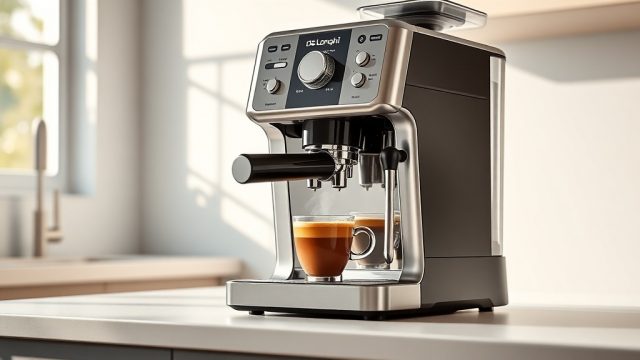
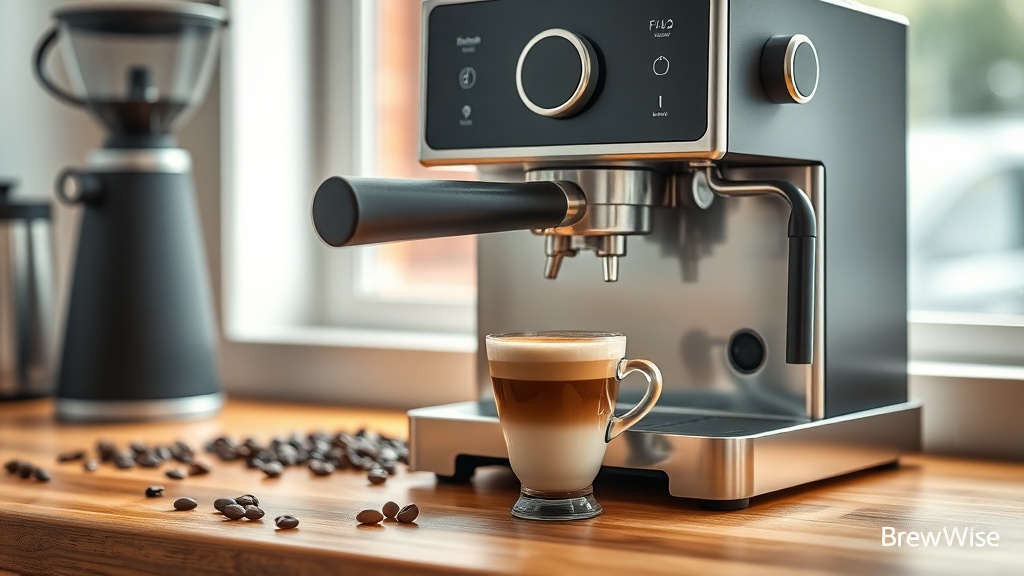
The BrewWise Thermoblock espresso machine delivers consistent water temperatures for extraction, but its performance hinges on proper grinder settings. Many users struggle with channeling, sour shots, or bitter over-extraction because they don’t match grind size to the Thermoblock’s heat-exchanger behavior. This guide focuses exclusively on grinder adjustments to achieve balanced espresso extraction with a BrewWise Thermoblock, considering its 53mm (or 58mm, depending on model) portafilter and typical 9-bar pump pressure.
What grind size works best for BrewWise Thermoblock espresso?
For most BrewWise Thermoblock models, a medium-fine grind is the starting sweet spot. This means particles that feel slightly coarser than table salt but finer than granulated sugar. Because the Thermoblock heats water on demand rather than maintaining a large boiler, the brew temperature can dip slightly during the shot if the grind is too fine. Therefore, a medium-fine grind ensures the water has enough resistance to build pressure (9 bars) but not so much that it stalls the pump or causes rapid heat loss.
- If the shot runs too fast (under 20 seconds): tighten the grind one full step finer.
- If the shot chokes (over 40 seconds): coarsen the grind by one full step.
- For medium-roast beans: start at medium-fine and adjust by half-steps.
Always use a extraction time guide to verify your results—target 25-30 seconds for 18g in, 36-40g out.
How do I calibrate my grinder for a BrewWise Thermoblock?
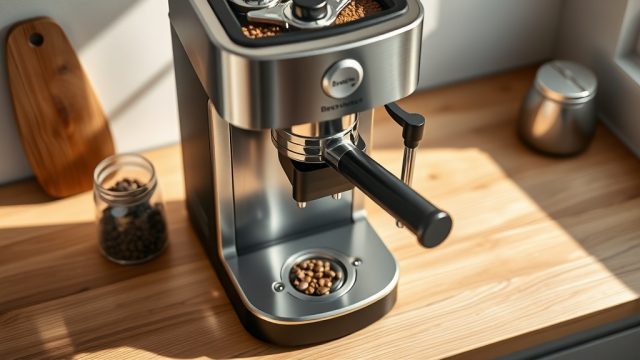
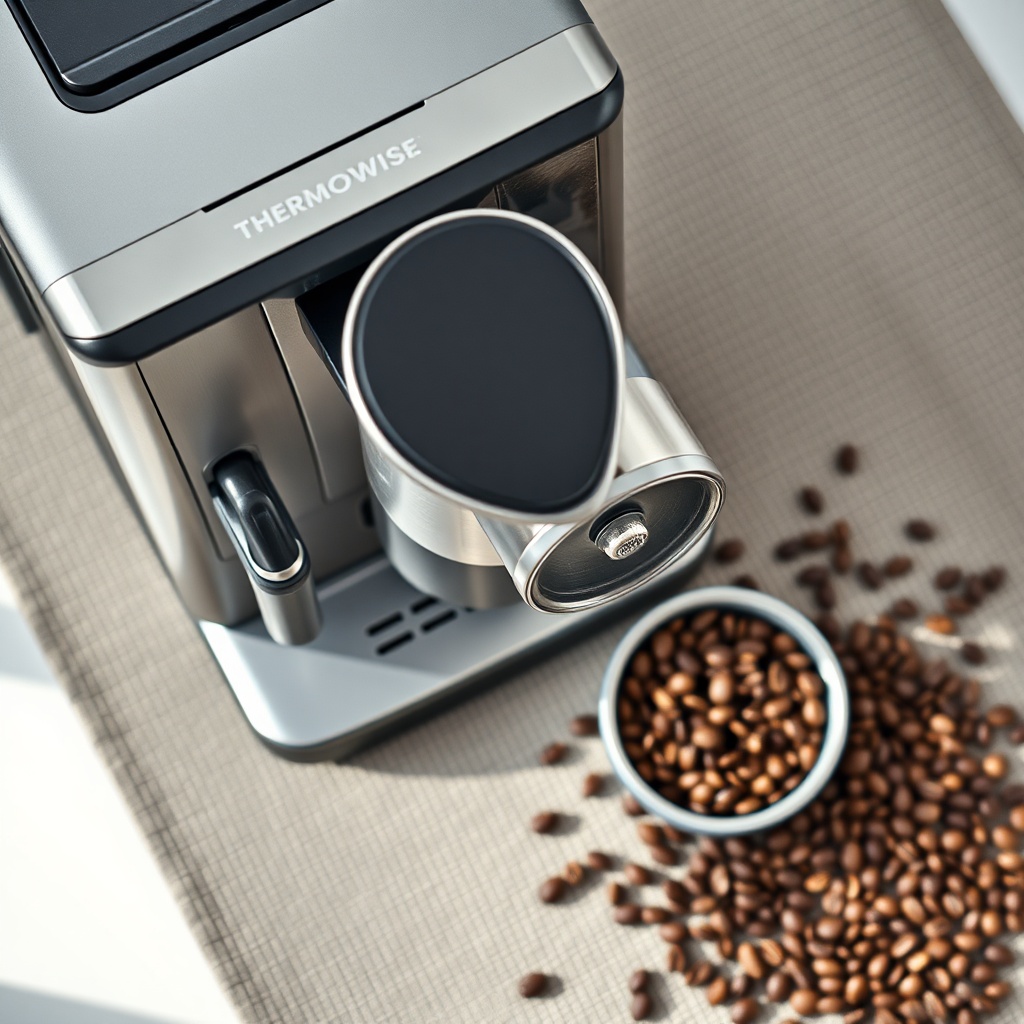
Calibration starts with a clean grinder and fresh beans (roasted 7-21 days old). Set your grinder to a medium reference point (e.g., 12 on a 1-40 scale). Run 10g of beans to purge stale grounds, then dose 18g into the portafilter. Tamp evenly with 30 lbf (15 kg) pressure. Lock the portafilter correctly into the BrewWise Thermoblock’s group head—it should click at around 90 degrees.
With no pre-infusion (many Thermoblock models lack adjustable pre-infusion), the first drop should appear at 5-7 seconds. If it’s later, grind slightly coarser; if earlier, finer. Because the Thermoblock’s PID regulates temperature tightly (±1°C), small grind changes are amplified—adjust in 0.1mm increments (about one micro-step) for best control.
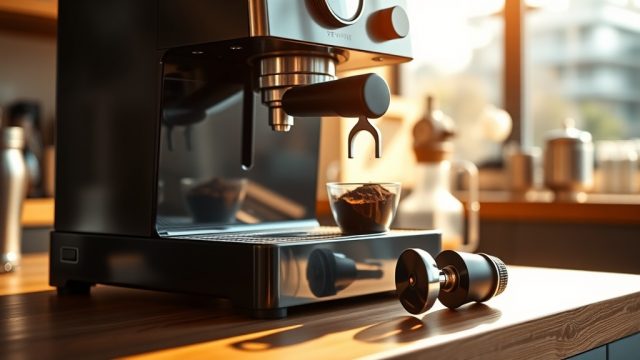
- Use a grind distribution tool: WDT (Weiss Distribution Technique) reduces channeling, which is more common with Thermoblocks due to sudden heat spikes.
- Check for static cling: Thermoblock machines can create drier grounds; spritz beans with a single mist of water before grinding.
What grind setting to avoid pressure drop on a BrewWise Thermoblock?
Pressure stability is a known challenge with these machines. If you experience low pump pressure, the grind might be too fine, causing the flow to slow and the pump to struggle. Conversely, a too-coarse grind drops pressure below 7 bars, leading to under-extraction. The ideal grind ensures your BrewWise Thermoblock’s pump maintains 8.5-9.5 bars during the shot.
| Grind Setting (Visual) | Particle Size (µm) | Brew Pressure (bar) | Resulting Shot |
|---|---|---|---|
| Very fine (powder) | 100-200 | Over 11 (chokes) | Bitter, stalled, potential damage |
| Fine (table salt) | 200-300 | 9-10 (slightly high) | Harsh, fast heat loss |
| Medium-fine (recommended) | 300-400 | 8.5-9.5 (optimal) | Balanced, 25-30 sec |
| Medium (sand) | 400-500 | 7-8.5 (low) | Sour, watery, under-extracted |
| Coarse (gravel) | 500+ | Under 7 | Very sour, channeling |
If pressure still drops, first check water filtration mineral balance—hard water scales the thermoblock and reduces heat transfer, indirectly affecting flow and pressure.
Should I change grind size when using different roast levels?
Yes, roast level dramatically changes grind requirements for a BrewWise Thermoblock. Light roasts are denser and need a finer grind (fine to very fine, close to 250-300 µm) to slow extraction and avoid sourness. Dark roasts are brittle and more soluble—use a coarser grind (medium to medium-coarse, 400-450 µm) to prevent bitterness and over-extraction. Because the Thermoblock’s heating element can spike temperature on light roasts, you may also need to adjust brew temperature; read the temperature adjustment guide for precise control.
- Light roasts: Fine grind, aim for 28-30 seconds, 92-94°C.
- Medium roasts: Medium-fine, 25-28 seconds, 90-92°C.
- Dark roasts: Medium, 22-25 seconds, 88-90°C.
Always recalibrate when switching roasts—even a 20 µm shift changes extraction by several seconds.
How to fix channeling with BrewWise Thermoblock grind settings?
Channeling occurs when water finds a path through the puck due to uneven grind distribution. On a Thermoblock, channeling also causes temperature fluctuations because the heating element tries to compensate for rapid flow changes. Fix this by:
- Grinding slightly finer (one micro-step) to increase overall resistance, forcing water through all parts of the puck.
- Improving distribution: after grinding, use a WDT tool (or paperclip) to break clumps, then tap the portafilter side to settle grounds.
- Tamping level: an uneven tamp worsens channeling—tamp firmly, then spin the tamper to polish.
- Check for water hardness: scale buildup in the thermoblock can cause uneven heating, leading to localized channeling. Follow the water hardness setting guide to avoid this.
If nothing works, ensure your grinder burrs are sharp; dull burrs produce a wide particle size distribution that encourages channeling.
What do BrewWise Thermoblock owners say about grinder settings?
In forums and user reviews, owners consistently emphasize three points: first, the Thermoblock’s sensitivity to grind changes means “even a half step on a Eureka grinder changes the shot drastically.” Second, many found that medium-fine works 80% of the time, but dark roasts require going coarser than expected. Third, the lack of pre-infusion means distribution is critical—users who switched to WDT reported a 30% reduction in sour shots.
One long-term owner on a coffee forum noted: “I spent months chasing pressure drops until I realized my grind was too fine for the Thermoblock’s quick heating. I coarsened from 12 to 13 on my Rocky grinder, and pressure sat at 9 bars perfectly.” Another user recommended using a 15g dose instead of 18g to give the Thermoblock more room for even flow. A common complaint was that inconsistent grinders (like cheap blade grinders) produce too many fines, causing stubborn channeling. For best results, most owners pair the BrewWise Thermoblock with a capable flat burr grinder (e.g., DF64 or Baratza Sette 270).
Frequently Asked Questions
How fine should I grind for a BrewWise Thermoblock?
Target medium-fine (300-400 µm) for most beans. Adjust finer for light roasts or if shots run under 22 seconds, coarser for dark roasts or over 35 seconds.
Does grinder quality matter for the BrewWise Thermoblock?
Yes, a $100 blade grinder will not produce consistent particles, causing channeling and pressure instability. A quality burr grinder ($250+) is recommended.
Can I use a pressurized basket to avoid grinding so fine?
Pressurized baskets work but reduce crema quality and flavor depth. They are a crutch; for best extraction, use a regular basket and proper grind.
Why does my BrewWise Thermoblock pressure drop with a fine grind?
A very fine grind (under 200 µm) can stall the pump, especially if the thermoblock is scaled. Consult the low steam pressure troubleshooting guide for a comprehensive fix.
Should I adjust grind when using pre-ground coffee?
Pre-ground coffee is usually too coarse for espresso. If you must use it, try a pressurized basket and accept lower quality.
How often should I clean my grinder for the Thermoblock?
Clean grinder burrs every 2-3 weeks with Grindz tablets and a brush to remove oils that cause clumping and inconsistent grind size.