How Does Water Hardness Affect Espresso Extraction in the Breville Barista Express Impress?
Water hardness plays a crucial role in espresso quality, yet it is often overlooked by home baristas. The Breville Barista Express Impress integrates a built-in water filter and digital dosing technology, but the mineral content of your local tap water directly impacts extraction efficiency and flavour clarity. Hard water, rich in calcium and magnesium, can slow extraction and mute delicate tasting notes, while soft water may lead to under-extraction and a flat finish. Understanding how to manage water hardness is vital for achieving consistent, balanced espresso with this machine.
The Impress model relies on precise temperature control via its PID system, but even the best temperature stability cannot compensate for mineral imbalance. Over time, hard water also accelerates internal scaling, which alters the heat exchange efficiency of the thermocoil. This degradation gradually shifts the extraction profile, making espresso taste bitter or hollow. To preserve the machine’s performance and flavour fidelity, a targeted approach to water filtration is essential.
What Is the Ideal Water Hardness Range for the Breville Barista Express Impress?
For the Breville Barista Express Impress, the ideal water hardness measured as total dissolved solids (TDS) falls between 80 and 150 parts per million (ppm). This range provides sufficient mineral content to facilitate proper extraction without causing rapid scale build-up. Water below 50 ppm typically lacks the ions needed to bind with coffee solubles, resulting in sour, weak shots. Water above 250 ppm, common in UK hard-water regions like London or the South East, leads to gritty textures and a metallic aftertaste.
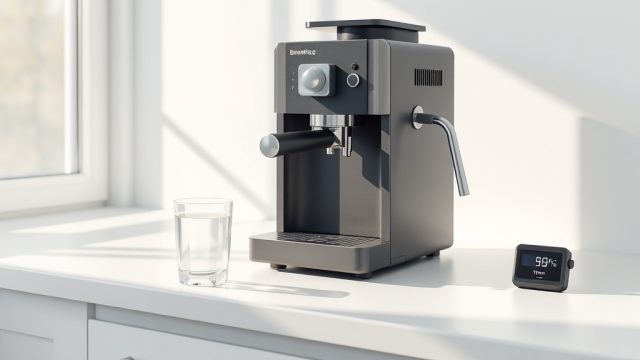
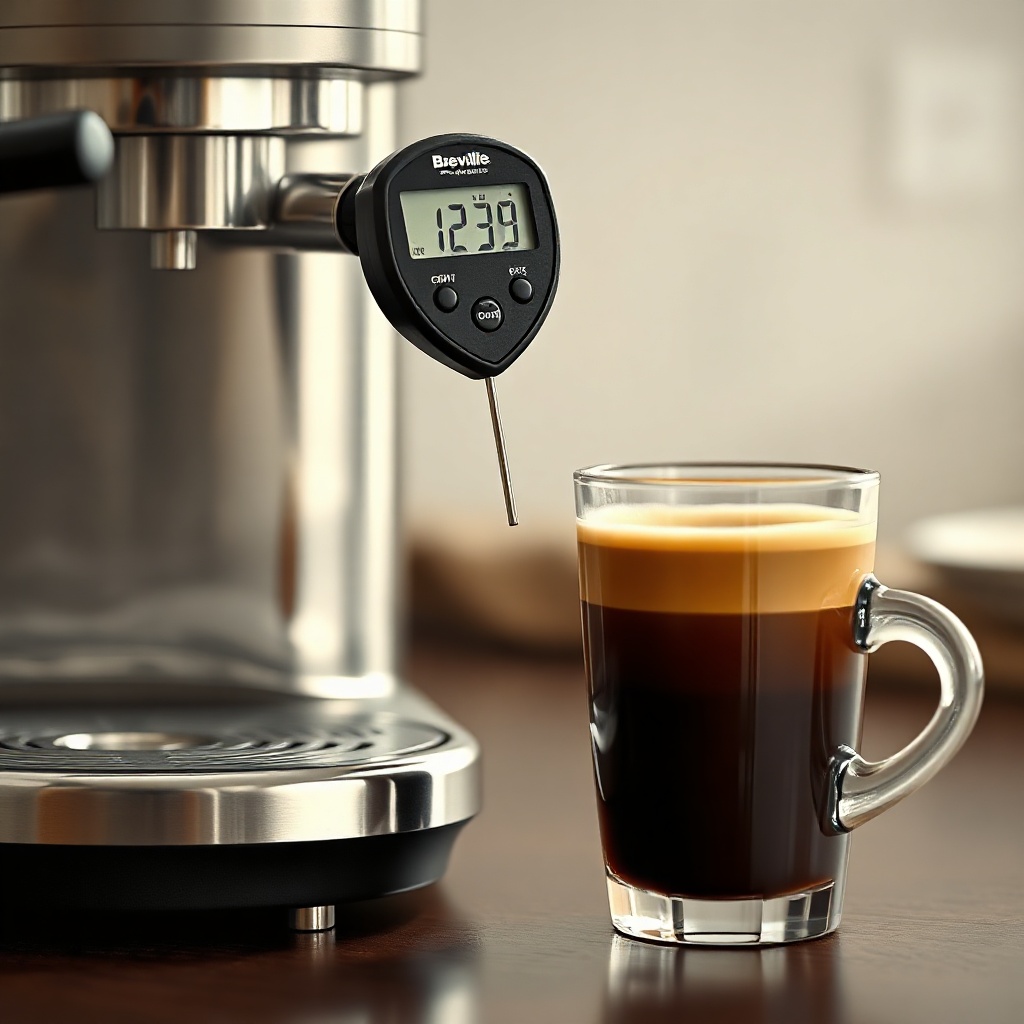
Using a TDS meter, you can test your tap water monthly. If readings exceed 150 ppm, a dedicated water filter or a descaling schedule becomes imperative. The Breville Barista Express Impress includes a water hardness test strip in its accessory kit; however, this only measures temporary hardness (calcium carbonate). For a comprehensive picture, measure both temporary and permanent hardness. We recommend pairing the machine with a pitcher filter or inline filtration system to stabilise mineral levels within the ideal band.
How Does Hard Water Cause Bitter Espresso in the Breville Barista Express Impress?
Hard water does not directly add bitterness, but it alters the extraction kinetics. Calcium and magnesium ions bind more aggressively with coffee’s organic acids and chlorogenic compounds. This binding increases the solubility of bitter compounds like caffeine and quinic acid, especially when combined with the high brew pressure (15 bar) of the Impress. The result is an over-extracted, harsh espresso that masks the coffee origin’s sweetness.
Additionally, scale deposits inside the thermocoil reduce heat transfer, causing the water temperature to drop by 1-2°C during the shot. A lower temperature shifts the extraction towards under-developed flavours, but paradoxically, the residual heat from the scale also prolongs contact time, pushing more bitter components into the cup. This dual effect—temperature instability plus mineral interaction—creates a muddy, unpleasant taste that cannot be fixed by grind adjustment alone. Installing a water softener specific to espresso machines, such as those discussed in the article on Breville Barista Express Impress: Best Water Filter for Mineral Balance, can prevent this cascading issue.
Can Soft Water Damage the Breville Barista Express Impress or Ruin Crema?
Soft water, raised by distillation or excessive reverse osmosis, is corrosive to the machine’s brass and stainless steel components over time. The low mineral content strips protective ions from the metal surfaces, accelerating pitting in the group head and boiler. This corrosion not only shortens the Impress’s lifespan but also introduces metallic off-flavours into the brew. Furthermore, soft water lacks the buffering capacity to stabilise pH during extraction, leading to a thin, short-lived crema that collapses within seconds.
The Breville Barista Express Impress relies on a stable pH of around 7.0 to 7.2 for optimal crema formation. When the water is too soft, the coffee’s natural acidity remains unchecked, producing a sharp, unappealing taste. Many owners also notice that their steam wand performance degrades faster with soft water, as mineral deficiency affects thermal mass. A balanced approach is to remineralise filtered water with a pinch of potassium bicarbonate or to use water specifically formulated for espresso, such as Third Wave Water. For further reading on steam wand issues that can arise from poor water chemistry, see Breville Barista Express Impress: Steam Wand Not Frothing Milk? Troubleshooting and Fixes.
What Are the Symptoms of Scale Build-Up in the Breville Barista Express Impress?
Scale accumulation in the Breville Barista Express Impress manifests through several performance symptoms. The most common signs include a gradual increase in shot time (from 25–30 seconds to 40+ seconds with the same grind setting), a gurgling noise during extraction, and a drop in steam pressure. You may also notice a white, chalky residue around the drip tray and outlet holes. In terms of flavour, scale causes a distinct lack of sweetness and a lingering, dry bitterness.
To detect scale early, inspect the water tank liner and the area under the group head after each descaling cycle. If you observe flaking or discoloration, acute scaling has likely started. The Impress has an automated descaling alert, but it triggers only after significant build-up (roughly 90 cycles on hard water). Proactive monitoring and weekly water filter changes are far more effective. Table 1 below outlines the severity levels of scale build-up and their direct effects on espresso quality:
| Scale Severity | Indicator | Effect on Espresso Flavour | Recommended Action |
|---|---|---|---|
| Low (0–1 mm lining) | Shot time increase of 2–3 seconds | Slightly muted acidity, reduced aroma | Run descaling cycle monthly then install filter |
| Moderate (1–2 mm) | Steam wand sputters, shot time +10 seconds | Bitter, flat mouthfeel, crema disappears quickly | Immediate descaling; replace water filter |
| Severe (>2 mm) | Machine clicks or stalls during pre-infusion | Metallic, burnt taste; no crema | Professional servicing or replace thermocoil |
Adhering to the descaling frequency recommended is essential—consult the guide on Breville Barista Express Impress: How Often Should You Descale for Optimal Performance? for a schedule tailored to your water hardness level.
Which Filtration System Preserves Flavour While Preventing Scale?
For the Breville Barista Express Impress, the most effective filtration system combines sediment filtration, activated carbon, and ion exchange. Brita-style jug filters remove chlorine and some calcium but leave behind enough minerals to maintain TDS around 100 ppm. For those with very hard water (>300 ppm), a dual-stage under-sink system with a water softener cartridge is preferable. The key is to avoid deionisation or reverse osmosis without remineralisation, as these strip away all minerals.
I recommend the BRITA Intenza, which fits directly inside the Impress’s 2-litre water tank. Its “Fine” setting reduces calcium to soft levels while preserving magnesium and potassium, which coffee responds well to in terms of sweetness and body. Alternatively, the BWT Bestmax Premium line uses a magnesium-mineralised exchange resin—this not only softens but also adds a small amount of magnesium, improving extraction of floral and fruity notes. Replace the cartridge every two months or after 100 litres, whichever comes first. For a deeper dive into filter selection, read our dedicated guide on Breville Barista Express Impress: Best Water Filter for Mineral Balance.
What Owners Say
Feedback from Barista Express Impress owners on UK coffee forums highlights that water hardness adjustments yield immediate flavour improvements. One Bristol user reported switching from tap water (260 ppm) to filtered water (110 ppm) and noticing that their single-origin Ethiopian espresso transformed from a sour, thin brew to a berry-forward, sweet shot with thick crema. Another owner in Manchester observed that after installing a BWT filter, the machine’s descaling alert didn’t activate for over six months, saving both time and vinegar cost. A recurring complaint is that the supplied water filter is short-lived—lasting only around 60 litres before TDS drifts upward. Many owners suggest replacing it with a third-party unit for more consistent results. For those struggling with steam wand issues despite good water, the troubleshooting article at Breville Barista Express Impress: Steam Wand Not Frothing Milk? Troubleshooting and Fixes has been widely praised.
Frequently Asked Questions
1. Can I use tap water directly in the Breville Barista Express Impress?
Only if your tap water is within the 80–150 ppm TDS range. In most UK hard-water areas, tap water exceeds 200 ppm, leading to scaling and bitter espresso. Always test first.
2. Does the built-in water filter of the Impress remove scale-causing minerals?
Yes, but it uses a basic carbon filter that mainly removes chlorine and sediment. For significant calcium reduction, pair it with a pitcher-only filter or a dedicated water softener cartridge.
3. How often should I replace the water filter in the Impress?
Every two months or after 100 litres (about 200 double shots). When the filter is exhausted, TDS rises and extraction quality declines.
4. Will using distilled water damage the Breville Barista Express Impress?
Yes, distilled water is too corrosive and will leach metal ions from the group head and boiler. It also produces weak, tasteless espresso with poor crema.
5. How do I test the TDS of my water for espresso?
Use a handheld TDS meter (cost: £10–£15). Dip it into a glass of your filtered water; ideally, the reading should be between 80 and 150 ppm. Calibrate monthly.
6. Can water hardness affect the grinder or burr alignment?
Indirectly, yes. Scale residue from hard water can clog the pre-infusion chamber, leading to inconsistent puck pressure, which then forces the grinder to work harder. For burr alignment issues, see the guide on Breville Barista Express Impress Grinder Burr Alignment for Consistent Grind.