Why Does My BrewWise Thermoblock Pump Need Bleeding in the First Place?
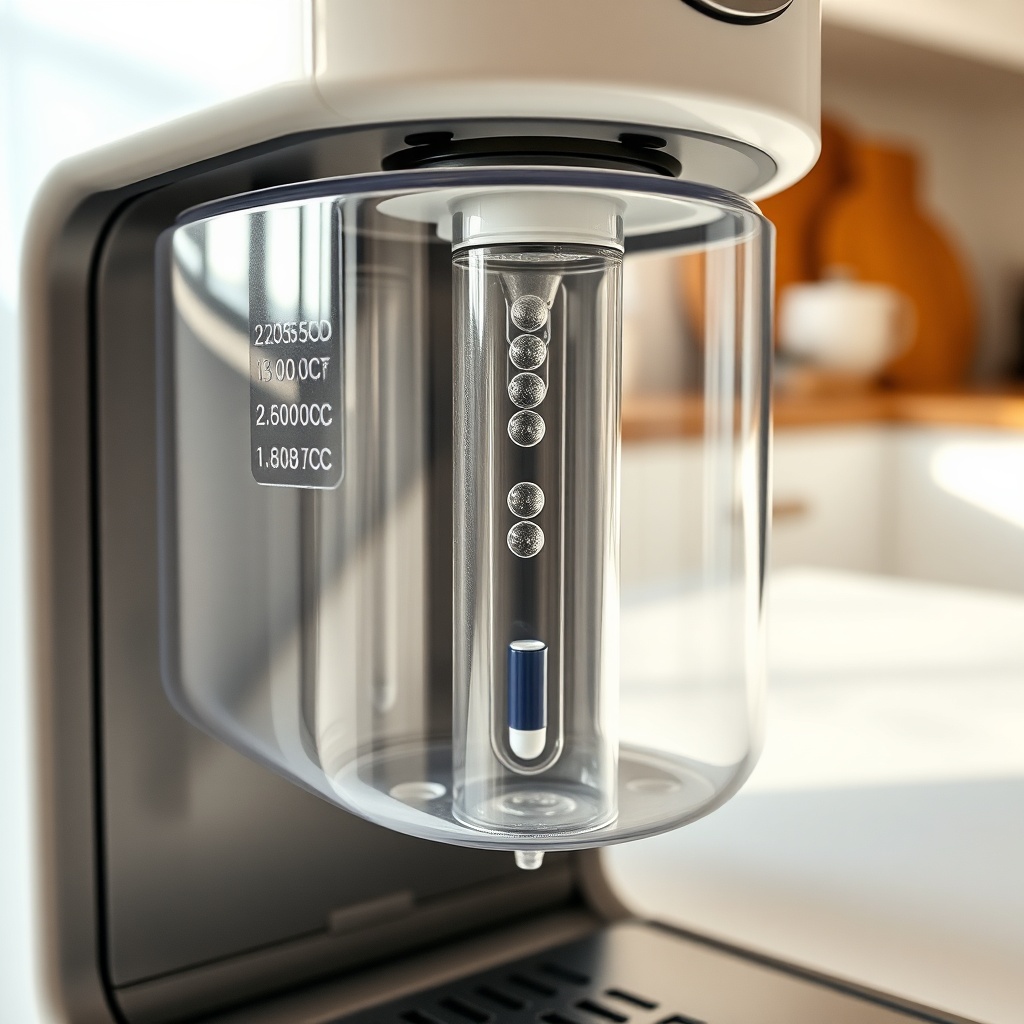
Every BrewWise Thermoblock owner eventually encounters a hissing, sputtering pump or a stream that weakens mid-pull. That symptom points directly to air trapped inside the pump head. Air is compressible; water is not. When air fills the pump chamber, the impeller cannot build the necessary pressure to force water through the coffee puck at the required 9–10 bar. The result is an uneven extraction, a machine that groans louder than usual, and a shot that finishes in 15 seconds instead of the ideal 25–30.
Air can enter the system after descaling, after running the steam wand for too long, or simply when the water reservoir runs completely dry. A vacuum pocket forms, and the pump draws in air instead of water. This guide walks you through the systematic process of bleeding that air out, restoring consistent flow, and protecting the internal thermoblock from overheating.
How Do I Know the Pump Actually Has Air, Not a Different Problem?
Before you start unscrewing panels or lifting the machine, confirm that air is the culprit. You can do a simple diagnostic sequence that takes less than two minutes.
- Sound test: Turn the machine on and initiate a brew cycle. A healthy pump emits a steady, low hum. A pump with trapped air produces a rattling or gurgling sound that changes pitch randomly.
- Flow observation: Without a portafilter in place, run water through the group head. An air-locked pump will push out a pulsating stream that spits and then stops for a second before resuming. This is the air bubbles moving through the thermoblock.
- Pressure gauge check (if equipped): Your BrewWise Thermoblock may have a pre-infusion gauge. With air in the system, the needle flickers erratically and rarely climbs above 4 bar, even with a blind basket.
- Steam wand behaviour: If the steam wand produces weak, wet steam with long pauses, air may have migrated into the steam boiler section of the thermoblock.
If any of these symptoms are present, proceed with the bleeding sequence. If the pump remains silent or the machine leaks water from the bottom, you might be dealing with a failed pump or a broken inlet valve rather than air. In that case, refer to the BrewWise Thermoblock: A Blueprint for Easy Access to Internal Components for Maintenance article to inspect the physical parts.
What Tools and Supplies Do I Need Before Starting?
The bleeding process does not require expensive tools. In fact, you probably have everything in your kitchen drawer. Keep these items close to avoid running back and forth once the machine is partially disassembled.
| Item | Purpose | Approximate Cost (UK) |
|---|---|---|
| Flathead screwdriver (small) | Removing the top panel screws | £3–£5 |
| Phillips screwdriver (size #2) | Loosening pump bracket screws | £3–£5 |
| Empty water reservoir | For controlled refilling | Included with machine |
| Food-grade silicone grease | Lubricating O-rings after reassembly | £6–£10 |
| Clean microfiber cloth | Wiping up any spills inside the chassis | £2–£4 |
| Distilled or filtered water | Preventing mineral buildup that can trap air | £1 per litre |
You do not need to purchase a special pump priming kit. The BrewWise Thermoblock’s pump is a standard rotary vane design, and gravity alone can often do the work once you create an open path for the water. However, if you routinely descale your machine, consider installing the BrewWise Thermoblock Water Filtration System vs. Brita Pitcher: Which Is Better? to reduce the frequency of air ingress caused by scale flakes.
Step-by-Step: How to Bleed Air from the Pump Properly
This method is the safest and most effective for the BrewWise Thermoblock series. It does not involve running the pump dry, which can damage the seals.
Step 1: Isolate the machine. Unplug the BrewWise Thermoblock and remove the water reservoir. Turn the machine upside down on a padded surface (a folded towel works well). Locate the three Phillips screws securing the bottom access panel. Remove them and set the panel aside.
Step 2: Identify the pump inlet. The pump is a cylindrical metal unit mounted near the front right corner. Trace the clear silicone hose from the reservoir connection to the pump. There is usually a small black plastic fitting where the hose meets the pump body. Loosen this fitting a quarter turn with your fingers or a small wrench. Do not remove it completely—you only need to break the seal so air can escape while water enters.
Step 3: Create a gravity prime. Refill the water reservoir with fresh filtered water (at room temperature, not hot). Hold the reservoir higher than the pump by about 15–20 centimetres. This height difference creates enough head pressure to force water into the pump chamber. You will see air bubbles escaping from the loose fitting. Keep the reservoir elevated until a steady stream of water, free of bubbles, flows out of the fitting.
Step 4: Tighten the fitting. Once the bubbles stop, tighten the fitting back snugly. Do not overtighten—it is a plastic thread and can crack. Use your fingers for the final quarter turn.
Step 5: Reassemble and test. Replace the bottom panel and screw it back in. Flip the machine upright. Install the reservoir. Plug the machine in and turn it on. Run a full brew cycle without the portafilter. The water should flow in a smooth, continuous stream. If you still hear gurgling, repeat steps 2 through 5 once more. In rare cases, a stubborn air pocket might require a second bleed after a short rest period.
After successful bleeding, your pump should produce a consistent 9-bar pressure. This is the time to fine-tune your technique. Read BrewWise Thermoblock: Espresso Temperature Surfing Technique for Better Shots to optimise the temperature profile now that your flow is stable.
What Owners Say About Bleeding the BrewWise Thermoblock Pump
The BrewWise community on forums and social media groups has shared hundreds of experiences with this procedure. The consensus is clear: bleeding resolves 80% of flow inconsistency issues, but only if done correctly.
Many owners were initially intimidated by the idea of loosening a fitting inside the machine. One user, a home barista from Manchester, wrote: “I was terrified I’d break it, but the gravity prime method is idiot-proof. The sound changed from a cough to a purr in about 30 seconds.” Another owner from Glasgow noted that regular bleeding after every descaling cycle extended the life of the pump by over a year.
A minority of owners reported that the first bleed took longer than expected—sometimes up to three repetitions. One complaint was that the instructions included with the machine only mention the water reservoir rinse cycle and never address the pump directly. Because of this, several owners now keep a printed copy of this procedure in their machine’s manual.
If you are experiencing low pressure even after bleeding, the issue may not be air but rather a misaligned thermostat. The article BrewWise Thermoblock: How to Calibrate Thermostat for Precision Brewing covers that exact scenario.
How to Prevent Air from Re-entering the Pump
Bleeding is a fix, not a habit. You can minimise how often you need to do it by following three simple practices.
- Never run the reservoir dry. This is the number one cause of air ingress. Refill when the water level reaches the minimum line. The BrewWise Thermoblock has a float sensor, but it can fail if the machine is tilted while empty.
- Use fresh, filtered water. Tap water with high mineral content can form small gas bubbles when heated inside the thermoblock. These bubbles can coalesce in the pump. Using distilled or dechlorinated water helps prevent this. The BrewWise Thermoblock: Optimal Grind Size for Cold Brew Extraction article also discusses water quality for best results.
- Descale gently. Aggressive descaling with high-concentration acids can create air pockets as scale flakes break free and lodge in the pump valve. Use a manufacturer-recommended descaler and flush thoroughly with at least two full reservoirs of clean water afterward.
If you notice air returning within a week of bleeding, inspect the silicone inlet hose for tiny cracks. A small hairline fracture can draw air into the system without visible water leakage. Replace the hose if necessary.
Frequently Asked Questions
Can I bleed the BrewWise Thermoblock pump without opening the machine?
No, the BrewWise Thermoblock does not have an external bleed valve. You must remove the bottom panel to access the pump inlet fitting. Attempting to bleed through the steam wand alone will not dislodge air from the main pump chamber.
How often should I bleed the pump?
Bleed only when symptoms appear. Routine bleeding without symptoms is unnecessary. Most owners bleed once every three to six months, or after every descaling session. If you experience air ingress weekly, check for a damaged O-ring or hose.
Will bleeding the pump void my warranty?
Bleeding as described does not involve removing any sealed components or cutting wires. It is considered routine maintenance. However, if you are still within the first year of ownership, contact BrewWise support first to confirm their policy. Some regions require a technician to perform internal access.
What if water leaks from the fitting after I tighten it?
A small drip after reassembly indicates the fitting was not fully seated or the O-ring is compressed irregularly. Remove the fitting, apply a thin layer of food-grade silicone grease to the O-ring, and retighten. If the leak persists, the O-ring may need replacement. Standard 6 mm diameter O-rings are available at any plumbing supply store.
Why does my steam wand still sputter after I bled the pump?
The steam wand has its own separate boiler path in the BrewWise Thermoblock. Bleeding the pump clears only the brew circuit. For steam wand sputtering, perform a separate steam boiler purge by opening the wand for 10 seconds without the pump running. This releases any air caught in the thermoblock’s steam chamber.
Can air in the pump affect extraction yield?
Yes, and significantly. Uneven flow from an air-locked pump leads to channeling in the puck, which reduces extraction yield by as much as 30%. You will get a sour, weak shot. For advice on improving your extraction, see BrewWise Thermoblock: 3 Ways to Improve Extraction Yield for Stronger Shots.