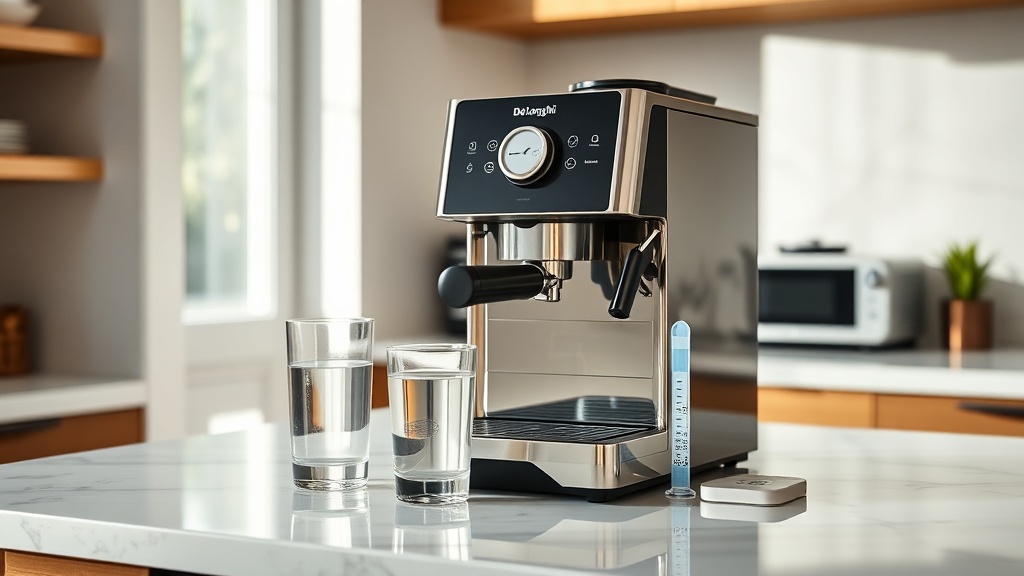
For owners of the De’Longhi Magnifica S, water hardness is not just a number on a test strip—it is the single most influential factor in machine longevity and espresso flavour. Set it too low and limescale builds up silently, choking internal components. Set it too high and the descaling alarm triggers prematurely, interrupting morning routines. This article walks through the exact water hardness settings, why they matter, and how to match them to British water supplies.
What Water Hardness Level Should the De’Longhi Magnifica S Use?
The De’Longhi Magnifica S uses a 1–5 water hardness scale, where 1 is very soft water (below 7 °dH) and 5 is very hard (above 32 °dH). For most UK households, the correct setting falls between 3 and 4. In London or the South East, where Thames Water reports hardness often exceeding 200 mg/L calcium carbonate, setting 4 is the recommended baseline. Northern regions such as Scotland or North West England, where water is naturally softer, typically need setting 2 or 3.
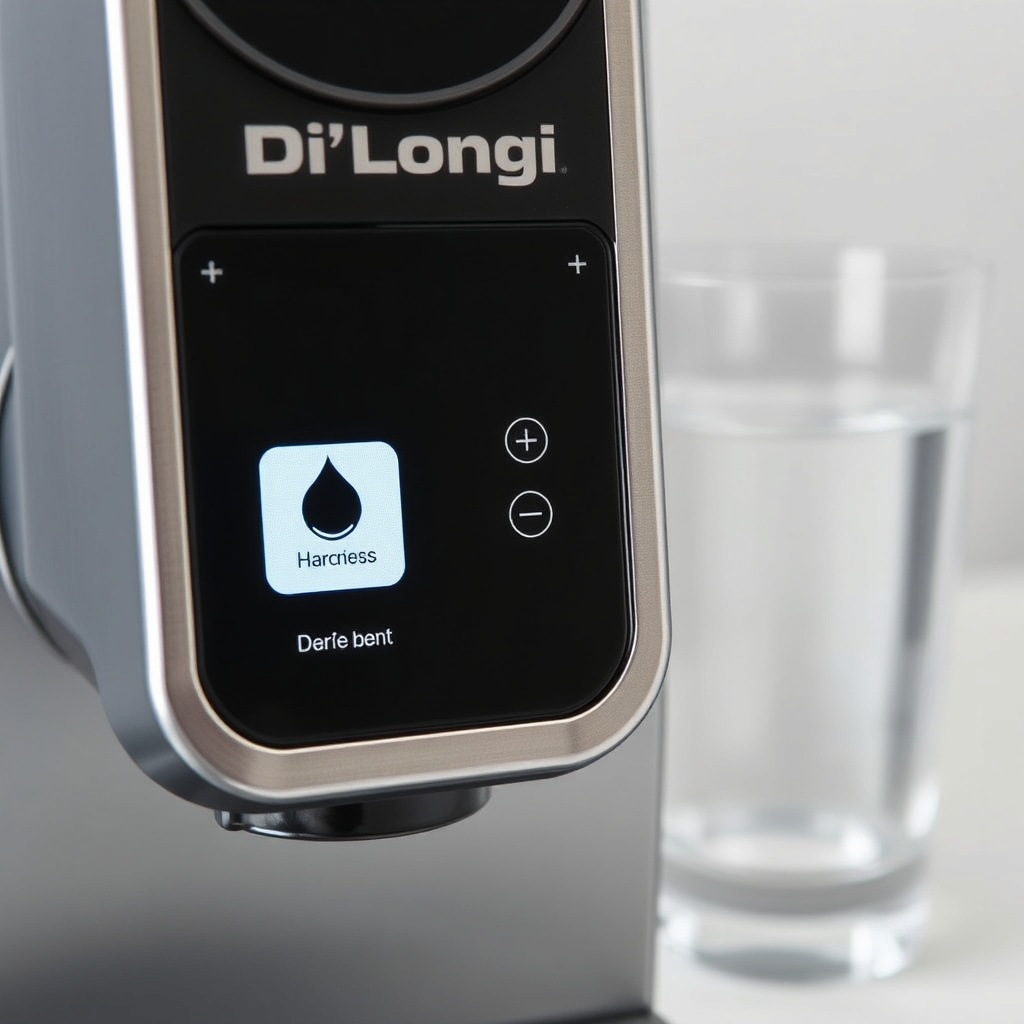
To set it: press the MENU button, scroll to the water hardness icon (a water droplet with an arrow), then use the +/- buttons to select the number that matches your local hardness. Confirm by pressing MENU again. The machine remembers this during descaling cycles.
If you have recently moved house or changed water supplier, re-test and adjust. Using the wrong setting is one of the most common causes of the Magnifica S water tank not detected messages, as scale deposits can block the tank sensor.
How Does Water Hardness Affect Espresso Taste and Machine Health?
Hard water contains calcium and magnesium ions. In the boiler and thermoblock, these ions precipitate as limescale when water is heated above 65 °C. Limescale acts as an insulator, reducing heat transfer efficiency. The machine then works harder, consumes more electricity, and eventually triggers the “descaling required” light sooner than expected.
On the flavour side, hard water can make espresso taste flat or chalky. The minerals bind to coffee compounds, masking acidity and sweetness. Conversely, very soft water often under-extracts coffee, leading to sourness. Ideal brewing water sits at 50–100 mg/L calcium carbonate (roughly setting 3 on the De’Longhi scale).
Magnifica S users in hard-water areas are advised to use filtered or bottled spring water with moderate mineral content. Do not use distilled or reverse-osmosis water—it corrodes the stainless steel boiler over time.
How to Test and Identify Your Home Water Hardness Accurately
Three reliable methods exist:
- Online postcode lookup – Enter your postcode on your water company’s website. Most suppliers publish annual water quality reports with hardness in mg/L or degrees Clarke.
- DIY test strip – De’Longhi includes a test strip in the box. Dip for one second, wait 30 seconds, and compare the number of red squares to the legend. Each square equals about 1 unit on the 1–5 scale.
- Electronic TDS meter – A simple £10–£20 meter measures total dissolved solids. Multiply the reading (in ppm) by 0.056 to get °dH. One °dH equals one unit on the De’Longhi scale.
Once you know your °dH, use the reference table below.
Water Hardness Setting Reference Table
| °dH (German Hardness) | Water Classification | De’Longhi Setting |
|---|---|---|
| 0–7 | Very Soft | 1 |
| 7–14 | Soft | 2 |
| 14–21 | Medium | 3 |
| 21–32 | Hard | 4 |
| 32+ | Very Hard | 5 |
If your water falls between two settings, choose the lower number. The descaling frequency will be slightly longer, but scale accumulation is still manageable.
Can a Wrong Hardness Setting Cause the De’Longhi Magnifica S to Malfunction?
Yes. Setting the hardness too low in a hard-water area means the machine will under-estimate scale build-up. The internal water flow sensor, which measures flow rate to detect blockages, may be fooled by a slow trickle caused by scale. This is a direct cause of the machine stopping mid-brew or displaying a “general alarm” error.
Conversely, setting the hardness too high in a soft-water area forces the descaling cycle to activate too frequently. Each descaling cycle uses citric acid or a proprietary descaler, which is mildly abrasive. Running this cycle every 100 cups instead of every 400 cups accelerates wear on seals and the brew group.
Users who have experienced inconsistent grind size often overlook water hardness. For details on dialling in the correct grind alongside the right hardness, see our guide on De’Longhi Magnifica S: Best Grind Size for Espresso.
What Is the Relationship Between Water Hardness and the Descaling Schedule?
The De’Longhi Magnifica S automatically calculates the descaling interval based on the programmed water hardness and the number of coffees brewed. At setting 3, the machine typically signals descaling every 300–400 cups. At setting 5, the interval shortens to about 100–150 cups.
The descaling process itself takes roughly 25 minutes and uses a solution of De’Longhi descaler mixed with water. A full guide to the steps is available in De’Longhi Magnifica S Cleaning Cycle: How to Run It. It is essential to complete descaling as soon as the “DESCALE” light remains solid—not blinking. Ignoring it causes scale to harden on the thermoblock, which may require professional repair.
After descaling, reset the counter by pressing the MENU button and selecting the “water hardness” icon—the machine will automatically ask if you want to reset the descaling counter. Confirm with the “OK” button.
What Owners Say About Water Hardness on the De’Longhi Magnifica S
In UK owner forums and Amazon reviews, the water hardness setting is one of the most discussed, yet misunderstood, features. A common remark from one Edinburgh user: “I had the machine set to 4 for two years and it was scaling up every three months. Changed to 2 after testing with a strip—now I descale twice a year and the coffee tastes cleaner.”
A reviewer in Kent reported: “The machine kept saying ‘tank not detected’ despite the tank being full. A descale fixed it, but I realised I had the hardness set to 1 when our water is around 300 ppm. Changed to 5 and the alarms stopped.”
Several owners note that using a Brita filter jug significantly reduces descaling frequency. One wrote: “I fill the reservoir from a Brita jug with the Maxtra+ cartridge. Hardness went from setting 4 to setting 2. The machine runs quieter and the steam wand doesn’t clog.”
For those comparing models, see our De’Longhi Magnifica S vs Philips 2200: Super-Automatic Showdown for water management differences between the two brands.
Frequently Asked Questions
1. What water hardness setting should I use for hard water in London?
For London water (typically 250–300 mg/L or 14–21 °dH), set the Magnifica S to 4. If you use a water filter, drop to 3.
2. Can I use tap water directly in the De’Longhi Magnifica S?
Yes, but only if your tap water is moderately hard (below setting 4). Very hard tap water will rapidly clog the machine. Filtering is recommended.
3. How often should I test water hardness for my machine?
Test once when you first set up the machine, then annually. If you move house or change water supplier, re-test immediately.
4. Does using bottled water change the hardness setting?
Bottled spring water varies by brand. Check the label for calcium and magnesium levels. Evian (304 mg/L) is hard; Volvic (10 mg/L) is very soft. Adjust setting accordingly.
5. What happens if I never set the water hardness?
The factory default is setting 3. If your water is very hard (setting 5), the machine will not scale-protect correctly, leading to blockages. If very soft (setting 1), it will descale too often, wasting descaler.
6. Will the descaling reminder go away if I ignore it?
No. The reminder will remain and eventually the machine will lock out after about 20–30 uses, refusing to brew until a descale is completed.