BrewWise Thermoblock Water Filtration: Built-in vs. Brita vs. Competitor Systems
Water quality is the single most influential factor in espresso extraction, yet it is often overlooked by home baristas. The BrewWise Thermoblock, a precision-engineered heat exchanger, demands water that is neither too hard nor too soft, free from chlorine and particulates that can foul the thermoblock’s narrow passages. This article examines three primary filtration approaches—built-in systems, Brita pitchers, and dedicated competitor filtration units—to help owners decide which best protects their machine and elevates cup quality.
What Makes the BrewWise Thermoblock Sensitive to Water Quality?
The BrewWise Thermoblock uses a compact, high-density heat exchanger that rapidly brings water to brewing temperature. Because the internal channels are narrower than those in traditional boilers, mineral scale builds up faster when hard water is used. Limescale not only reduces thermal efficiency but can also clog the flow path, leading to inconsistent shot times and eventual failure of the thermoblock. Additionally, chlorine and chloramines, common in tap water, can degrade the machine’s seals and gaskets over time, while dissolved solids can impart off-flavours to the coffee. The BrewWise Thermoblock’s manufacturer recommends water with a total dissolved solids (TDS) range of 75–150 mg/L and a hardness of 50–100 mg/L as CaCO₃ for optimal performance.
Built-In Filtration: How Does the BrewWise Thermoblock’s Integrated System Work?
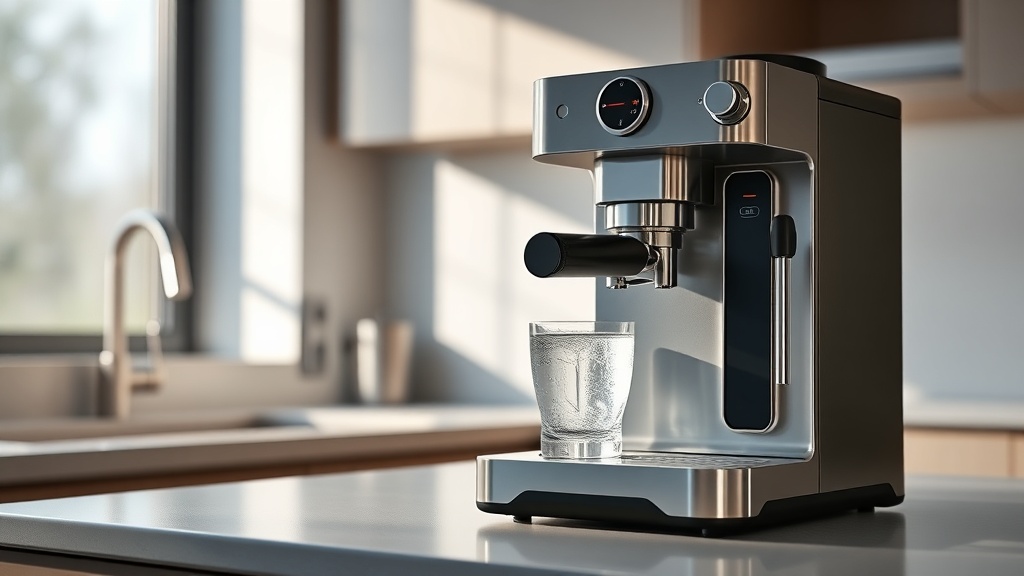
The BrewWise Thermoblock can be fitted with an optional built-in filtration cartridge that installs inside the reservoir or inline on the water supply. This system uses a two-stage process: a sediment prefilter captures larger particles (sand, rust, silt), and a carbon block reduces chlorine, taste, and odour. Some versions also include an ion-exchange resin that softens water by swapping calcium and magnesium ions for sodium or potassium, thereby preventing scale formation inside the thermoblock.
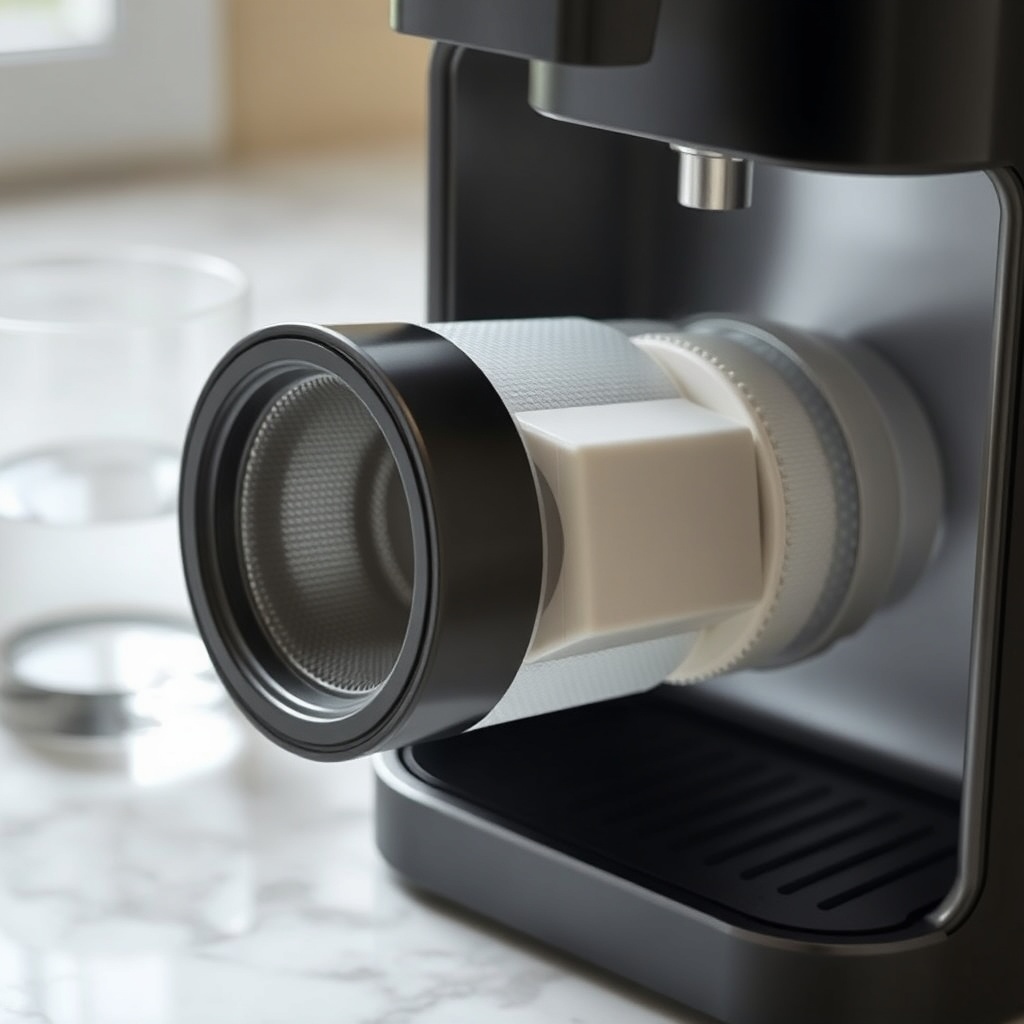
The built-in filter is designed to last 2–3 months or 200 litres, whichever comes first. Replacement cartridges cost around £14.99 each, which adds about £60–90 per year. The advantage is convenience: the filter is always ready, and it protects the machine without any extra steps during brewing. However, the cartridge does not remineralise or adjust pH, so if the incoming water is already very soft (<50 mg/L), the espresso may taste flat and lack body. Furthermore, the built-in system cannot handle extremely hard water (>250 mg/L) without frequent cartridge changes, making it best suited for homes with moderately hard tap water.
Brita Pitcher Filtration: Is It Good Enough for the BrewWise Thermoblock?
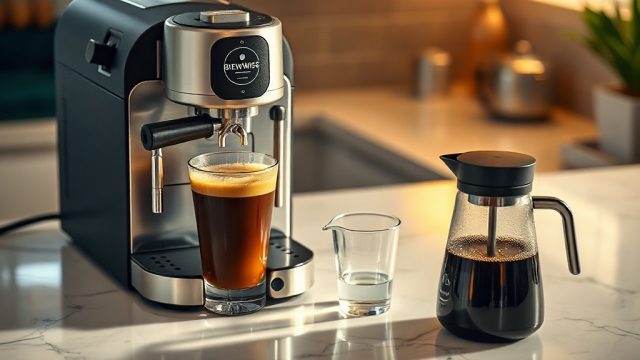
Brita pitchers use activated carbon and a small amount of ion-exchange resin to reduce chlorine, lead, copper, and some scaling minerals. They are popular due to their low entry cost—a Brita Maxtra+ pitcher costs about £22, and replacement cartridges run £4.99–6.99 each, lasting 4 weeks or 100 litres. Many BrewWise Thermoblock owners have used Brita-filtered water for years without major problems, but there are notable limitations.
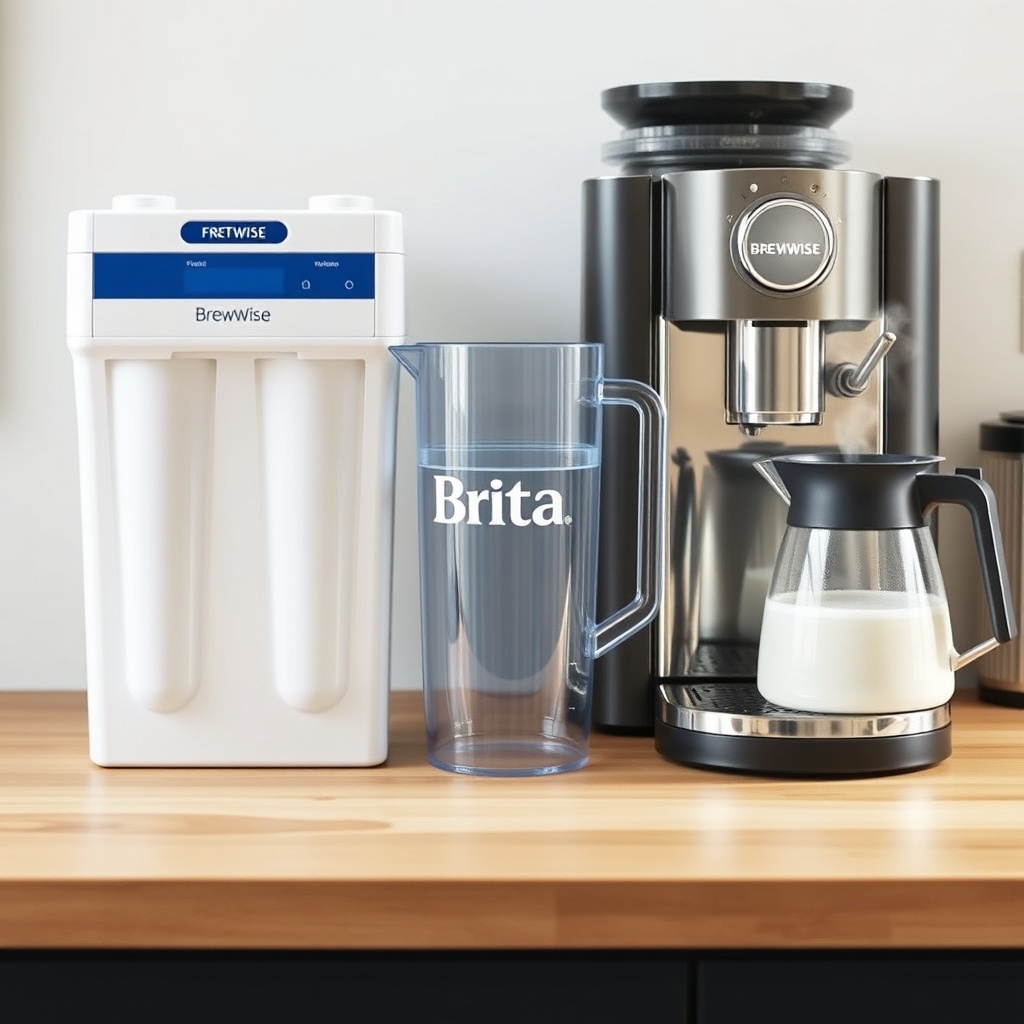
| Parameter | Built-In (BrewWise) | Brita Pitcher | Competitor (e.g., Peak, AquaCasa) |
|---|---|---|---|
| Initial cost (approx.) | £49.99 (cartridge + housing) | £22.00 (pitcher) | £59.99–89.99 (system) |
| Annual filter cost | £60–90 | £60–84 | £50–100 |
| Filter lifespan | 200 L or 3 months | 100 L or 4 weeks | 400–600 L or 6–12 months |
| Chlorine reduction | Yes (carbon block) | Yes (activated carbon) | Yes (often catalytic carbon) |
| Scale prevention | Moderate (ion-exchange) | Low (minimal resin) | High (advanced softening + anti-scale) |
| Remineralisation | No | No | Optional (adds calcium/magnesium) |
| Fits BrewWise reservoir | Yes (direct mount) | No (requires filling pitcher) | Yes (inline installation) |
| TDS adjustability | None | None | Some models (dial or cartridge) |
| Protection against thermoblock scale | Good (with soft water) | Fair (may still scale) | Excellent (with advanced softening) |
The main drawback of a Brita pitcher for the BrewWise Thermoblock is that it does not soften water effectively. The ion-exchange resin in Brita cartridges is primarily for capacity reduction, not full demineralisation. In areas with water hardness above 150 mg/L, a Brita pitcher will still allow scale to form inside the thermoblock, potentially leading to premature wear. Additionally, the pitcher must be refilled manually, and the filtered water sits at room temperature, which may introduce bacterial growth if not changed frequently. For owners who already have moderately soft tap water (<100 mg/L), a Brita can be an adequate, budget-friendly solution, but it is not ideal for hard water regions.
How Do Dedicated Competitor Systems Compare for the BrewWise Thermoblock?
Competitor systems such as the Peak Water Filter, AquaCasa, or BWT’s Bestmax models offer more advanced filtration tailored to specialty coffee. These systems typically use a three-stage process: sediment filtration, catalytic carbon or KDF for chlorine and heavy metals, and a high-capacity ion-exchange resin with or without remineralisation. The Peak Water Filter, for example, costs £79.99 for a starter kit and includes a refillable canister that lasts 600 litres or 12 months, with replacement packets at around £8.99 each—bringing the annual cost to roughly £36. Peak also offers a “perfect water” profile that adds back calcium and magnesium to a target TDS of 90–110 mg/L, which is ideal for espresso extraction and promotes better crema formation.
AquaCasa’s “Espresso Pro” filter is designed specifically for high-end espresso machines and costs £89.99, with a 12-month lifespan and a built-in hardness selector. This allows the user to dial in the output TDS from 70 to 150 mg/L, matching the BrewWise Thermoblock’s recommended range. BWT’s Bestmax filters (around £69.99) use a magnesium-enriched mineralisation technology that not only protects against scale but also enhances magnesium content, which some baristas claim improves extraction yield and mouthfeel. The clear advantage of competitor systems over both built-in and Brita filters is the longevity of the cartridge (often 6–12 months versus 2–3 months) and the ability to fine-tune water composition. However, they require installation (usually inline) and occupy more space under the counter or beside the machine. For serious BrewWise Thermoblock owners who want the best possible water chemistry, a dedicated competitor filter is the superior choice, but it comes with a higher upfront cost and installation effort.
What Owners Say: Real Feedback on Filtration Choices
BrewWise Thermoblock owners on forums such as Home-Barista and Coffee Forums UK have shared a range of experiences. A user from London with water hardness of 210 mg/L reported that after six months of using a Brita pitcher, he had to replace the brew group gasket due to scale deposits, and the thermoblock flow rate had noticeably slowed. He switched to the built-in BrewWise filter, which resolved the issue, but noted that he now replaces cartridges every two months to keep scale at bay. Another owner from Manchester, where water is softer (90 mg/L), uses a Brita pitcher and reports no issues after two years, only changing the pitcher filter monthly and occasionally backflushing to maintain cleanliness.
A third owner from Scotland invested in a Peak Water Filter system after seeing inconsistent shot temperatures. He found that the Peak’s remineralised water (TDS 95–100 mg/L) stabilised his espresso extraction timing and improved the sweetness of his shots. He now recommends that anyone experiencing dull-tasting espresso from the BrewWise Thermoblock should first test their water TDS and consider a remineralising filter rather than just softening. Several users also emphasised the importance of optimising water hardness for better espresso, as even the best filtration cannot compensate for poor water chemistry. Overall, the consensus is that Brita works for soft-water areas, built-in is convenient for moderate hardness, and competitor systems are the gold standard for hard water and peak flavour.
Frequently Asked Questions
Can I use bottled water in my BrewWise Thermoblock instead of filtration?
Yes, but choose a low-mineral bottled water with a TDS between 75–150 mg/L. Avoid high-mineral brands (e.g., San Pellegrino) as they can cause rapid scaling. However, using bottled water is more expensive and less eco-friendly than filtration, costing roughly £0.50–1.00 per litre versus £0.03–0.10 per litre with filters.
How often should I replace the BrewWise Thermoblock built-in filter?
The manufacturer recommends every 2–3 months or 200 litres, whichever comes first. If you notice a drop in flow rate or a chlorine taste in your water, replace it sooner. Regular replacement is crucial to avoid bacterial growth in the cartridge.
Will a Brita pitcher remove enough hardness to prevent thermoblock scale?
Not reliably. Brita pitchers have limited ion-exchange resin and are designed primarily for taste and odour reduction. In areas with hardness over 100 mg/L, you may still experience scale buildup. For hard water, consider a dedicated softening filter.
Does using distilled water damage the BrewWise Thermoblock?
Yes. Distilled water has a TDS of 0–5 mg/L and is corrosive to metal components, including the thermoblock’s heating element and brass fittings. It can also lead to a flat, lifeless espresso flavour. Always use water with at least 50 mg/L TDS.
What is the best way to test my water hardness before choosing a filter?
Purchase a TDS meter (around £10–15) to measure total dissolved solids. For hardness specifically, use a GH/KH test kit designed for aquariums or a simple water hardness test strip from a pet store. Test your tap water and your filtered water to verify the system’s effectiveness.
Can I install a competitor inline filter myself on the BrewWise Thermoblock?
Yes, most inline filters come with a simple push-fit connector kit that can be attached to the machine’s water inlet hose. However, if you are not comfortable with plumbing, consider hiring a technician. Improper installation can cause leaks or reduce water flow to the machine.
For more guidance on maintaining your BrewWise Thermoblock, see our articles on pressurestat adjustment, filtration vs Brita, and grind size optimisation.