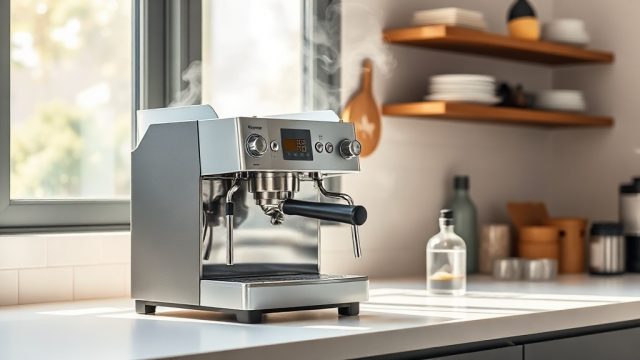
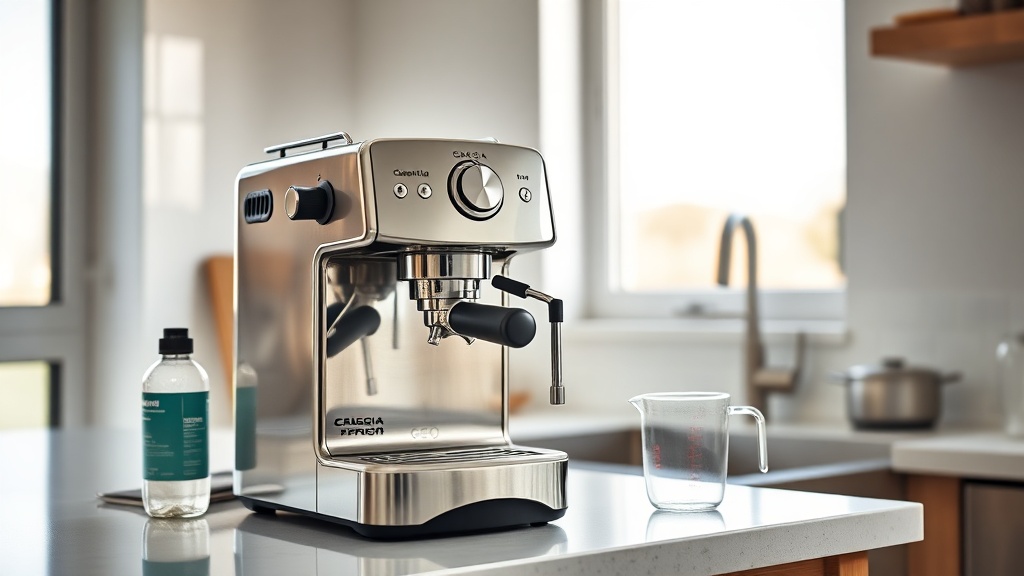
Keeping your Gaggia Classic Pro in peak condition requires regular descaling to prevent mineral buildup that can clog the boiler and damage internal components. Without a proper descaling routine, you risk inconsistent brew temperatures, weak steam pressure, and a shortened lifespan for your machine. This guide covers exactly how much descaling solution to use, how often to perform the process, and practical care tips based on real owner experience.
How Much Descaler Does the Gaggia Classic Pro Need?
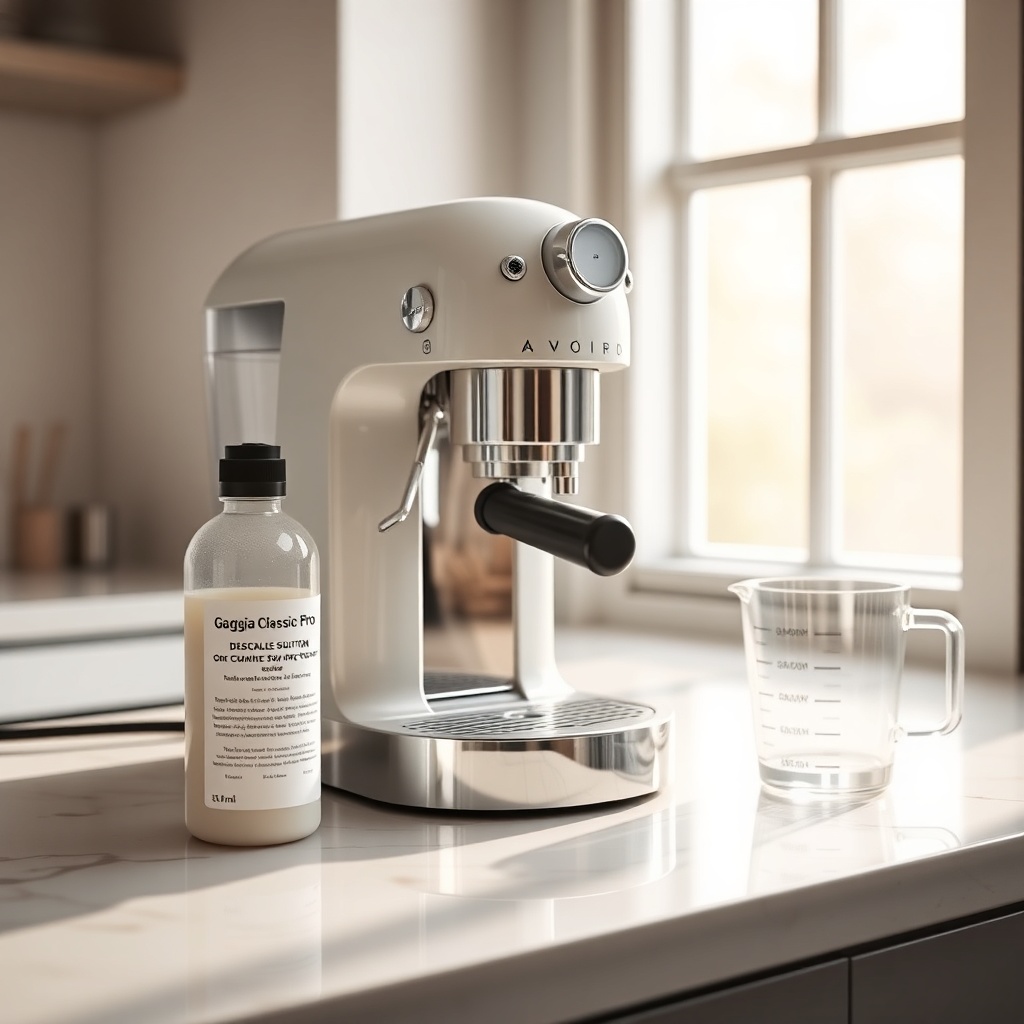
The Gaggia Classic Pro has a 120 ml (4 fl oz) aluminum boiler, which is relatively small compared to many home espresso machines. For a standard descaling cycle, you need approximately 1 liter (34 fl oz) of descaling solution total. Most commercial descaling products recommend a ratio of 50–100 ml of concentrate per 1 liter of water. For Gaggia’s own brand descaler or a third-party product like Dezcal, use 60 ml of concentrate mixed with 940 ml of water. The solution volume must be enough to fill the water reservoir (about 1.2 liters) and run through the boiler and group head.
Using too much descaling solution can cause foaming and excessive chemical residue, while too little may not dissolve scale effectively. Always refer to the descaling product instructions and your machine’s manual. For a thorough descale, you’ll need to run the entire 1-liter solution through the machine in two passes, then follow with two full reservoir rinses of fresh water.
How Often Should You Descale Your Gaggia Classic Pro?
The descaling frequency depends on water hardness and usage volume. With moderately hard water (100–150 ppm), most Gaggia Classic Pro owners should descale every 2–3 months or after approximately 200 shots. If you use soft or filtered water, you may stretch this to 4–6 months. Hard water (above 200 ppm) requires descaling every 6–8 weeks. The machine’s small boiler is prone to scale accumulation, so erring on the side of caution is wise.
You can estimate water hardness using a simple test strip or by contacting your local water supplier. If you notice reduced steam pressure, longer heat-up times, or a sputtering group head, descaling is overdue. For precise maintenance, consider installing a water filter to reduce scale buildup. Read our Gaggia Classic Pro: Best Water Filter Options to choose the right one for your setup.
What Is the Correct Descaling Procedure for the Classic Pro?
A proper descale prevents damage to the boiler and solenoid valve. Follow this step-by-step procedure:
- Empty the water reservoir and mix the descaling solution according to the product instructions.
- Fill the reservoir with the solution and place a large container (at least 1 liter) under the steam wand and group head.
- Turn on the machine and wait for the brew button to stop flashing. Run about 300 ml of solution through the group head by cycling the brew button on for 10 seconds, off for 10 seconds, repeating 5 times.
- Activate the steam wand for 20 seconds to draw solution through the steam boiler, then turn off and let the machine sit for 15 minutes to allow the solution to dissolve scale.
- Run the remaining solution through the group head and steam wand in similar cycles.
- Empty the drip tray and container. Fill the reservoir with fresh water and run two full reservoirs through the machine (group head and steam wand) to rinse thoroughly.
- After rinsing, brew a shot of coffee and discard it to clear any lingering chemical taste.
Avoid using vinegar or citric acid unless specified by Gaggia, as these can damage the aluminum boiler. Gaggia recommends a commercial descaler formulated for aluminum machines.
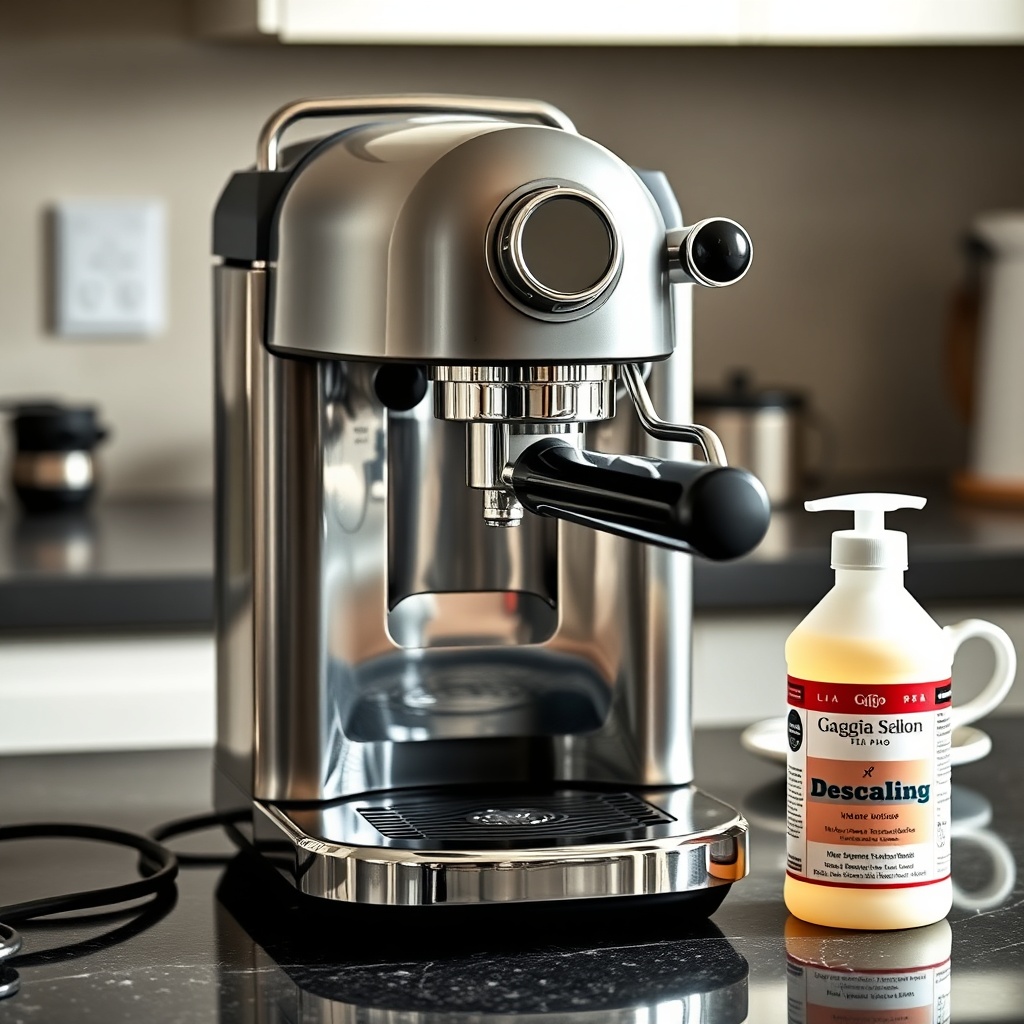
What Happens If You Don’t Descale the Gaggia Classic Pro?
Neglecting descaling leads to scale buildup inside the boiler, which acts as an insulator and causes the heating element to overwork. This results in erratic brew temperatures, typically 5–10°F lower than set, and weak espresso extraction. Scale also clogs the steam wand thermoblock, reducing steam pressure and making milk frothing difficult. In severe cases, scale can block the solenoid valve, causing the machine to fail to prime or leak water.
Owners who skip descaling for six months often report that their Gaggia Classic Pro requires more frequent cleaning of the steam wand tip and group head gasket. Over time, scale can permanently damage the boiler, requiring a costly replacement. If you experience low steam output, check our Gaggia Classic Pro: Troubleshooting Low Steam Pressure guide for diagnostic steps. Regular descaling prevents these issues and maintains consistent performance.
Can You Use Homemade Descaling Solutions?
Some owners consider using a mixture of white vinegar and water or citric acid powder as a cost-saving measure. However, vinegar’s acetic acid can corrode the aluminum boiler over time, especially if not fully rinsed. Citric acid is milder but still risky if the concentration is off. Gaggia explicitly warns against vinegar-based descaling in its manual because it may void the warranty.
Commercial descaling products like Urnex Dezcal, Durgol Swiss Espresso, or Gaggia’s own descaler are formulated for aluminum components and include corrosion inhibitors. These cost around £8–12 (€9–14, $10–15) per bottle, which covers 3–4 descaling sessions. Given the potential repair cost of a boiler replacement (often £100–150), the investment in proper descaler is negligible. For the best water to reduce scaling, see our Gaggia Classic Pro: Best Water Filter Options guide.
How Does Water Hardness Affect Descaling Frequency?
Water hardness directly impacts the descaling schedule. The following table outlines recommended intervals based on water hardness levels:
| Water Hardness (ppm) | Classification | Recommended Descaling Interval | Suggested Shots Between Descale |
|---|---|---|---|
| 0–50 | Soft | Every 6 months | 400–500 shots |
| 51–120 | Moderately soft | Every 4 months | 250–350 shots |
| 121–180 | Slightly hard | Every 2–3 months | 150–200 shots |
| 181–250 | Moderately hard | Every 6–8 weeks | 100–150 shots |
| 251+ | Hard | Every 4–6 weeks | 50–100 shots |
If you use a water filter, treat the water as one category softer. For example, 180 ppm water with a filter drops to the 121–180 ppm category. This table assumes typical daily use of 2–4 shots. Heavy users (6+ shots daily) should descale 30% more frequently.
What Owners Say About Descaling the Gaggia Classic Pro
Gaggia Classic Pro owners on forums and review sites consistently emphasize that descaling is straightforward but critical. Many note that the machine’s small boiler shows scale effects quickly—some report slower steam after just 3 months of hard water without descaling. Owners who descale every 2 months with commercial solution say their machines maintain consistent brew temperature and steam pressure for years.
A common tip from experienced users is to run a descaling cycle immediately after noticing any drop in steam power. Others recommend descaling before attempting an OPV adjustment. For those modifying pressure, see our Gaggia Classic Pro: How to Adjust OPV for 9 Bar guide. Some owners also note that descaling improves the taste of espresso by removing mineral residues that can impart a bitter or chalky flavor.
The main complaint is that the descaling process takes about 45 minutes including rinsing, which feels long for a single-boiler machine. However, most agree it’s a small price for longevity. A few owners who tried vinegar-based descaling reported a lingering vinegar smell that required multiple extra rinses, reinforcing the advice to use dedicated descaler.
Frequently Asked Questions
1. Can I use Gaggia descaler in the Classic Pro?
Yes, Gaggia’s own brand descaler is specifically designed for their aluminum boiler machines. Use 60 ml of concentrate per 1 liter of water. It’s widely available online and at specialty coffee shops for around £10–12 per bottle.
2. How do I know when my Gaggia Classic Pro needs descaling?
Signs include reduced steam pressure, longer heating time, sputtering from the group head, or a bitter taste in espresso. Some owners use the machine’s boiler temperature gauge (if installed) to spot temperature fluctuations; see our Gaggia Classic Pro: How to Install a Pressure Gauge for details.
3. Is descaling the same as backflushing?
No. Descaling removes mineral deposits from the boiler and pipes, while backflushing with a blind basket and cleaning powder removes coffee oil buildup from the group head and solenoid valve. Perform backflushing every 1–2 weeks and descaling every 2–6 months.
4. Can I descale the Gaggia Classic Pro with the steam wand only?
You must run descaling solution through both the group head and steam wand to clean the entire water path. The steam boiler is separate and also accumulates scale. Running solution only through the group head leaves the steam boiler dirty.
5. How much descaler for the initial descale on a new machine?
New machines do not require descaling, but you should flush the boiler with fresh water before first use. Run 2 full reservoirs of clean water through the group head and steam wand to remove any manufacturing residue. Start descaling after 2–3 months of use.
6. Will descaling fix low steam pressure on my Gaggia Classic Pro?
Yes, if low steam pressure is caused by scale buildup in the steam thermoblock, descaling often restores full power. If the problem persists after descaling, check for other issues such as a blocked steam wand tip or a failing pump. Our Gaggia Classic Pro Milk Steaming: Tips for Silky Microfoam guide can help you improve steam quality.
Proper descaling care ensures your Gaggia Classic Pro delivers consistent espresso and powerful steam for years. By following the correct solution dosage and interval based on your water hardness, you avoid costly repairs and maintain the machine’s performance. For a complete overview before purchase, read our Gaggia Classic Pro Buying Guide: Is It Right for You?.