Why Is My BrewWise Thermoblock Producing Weak Steam?
When the steam wand on a BrewWise Thermoblock delivers only a whisper instead of a forceful jet, milk frothing becomes frustrating and nearly impossible. Low steam pressure is one of the most common complaints among home baristas, and it can stem from several underlying issues. This article provides a structured troubleshooting guide to restore strong steam performance, helping you get back to crafting silky microfoam.
The BrewWise Thermoblock is a compact heat exchanger that rapidly heats water for both brewing and steaming. However, its efficiency depends on clear water pathways, proper mineral management, and correct pump operation. Understanding these components is the first step toward diagnosing weak steam.
What Causes Low Steam Pressure After Descaling?
Descaling is meant to remove limescale buildup, but if steam pressure drops immediately after the process, troubleshooting is needed. One frequent cause is residual descaling solution trapped inside the thermoblock. If the machine is not thoroughly flushed with fresh water, chemical deposits can create temporary blockages that restrict steam flow.
Another possibility is that loose mineral flakes dislodged during descaling have migrated into the steam wand’s narrow passage. These flakes can lodge at the tip or inside the thermoblock’s output channel. To resolve this, run at least three full water tank flushes and purge the steam wand for 30 seconds. If pressure remains low, inspect the steam tip for debris and clean it with a pin.
For detailed preventive care, see our guide on BrewWise Thermoblock: How Often to Descale for Longevity, which outlines optimal intervals based on water hardness and usage frequency.
Could a Clogged Steam Tip Be the Simple Fix?
Before assuming a major internal failure, check the steam wand tip. Milk residue, dried proteins, and mineral scale can partially or fully occlude the small holes. A clogged tip forces the pump to work harder, often resulting in low steam pressure and uneven heating.
Remove the steam tip (usually by unscrewing it) and soak it in a mixture of warm water and a descaling agent for 15 minutes. Use a needle or a specialized steam tip cleaning tool to clear each hole. Rinse thoroughly and reattach. This single step restores pressure in roughly 30% of reported low-pressure cases.
If the tip is clean but the issue persists, the blockage may lie deeper inside the wand or thermoblock. A full backflush using a cleaning tablet can often dislodge internal scale. For milk frothing best practices, refer to BrewWise Thermoblock: 5 Tips for Perfect Milk Froth, which covers wand hygiene and technique.
| Issue | Likelihood | Severity | Estimated Repair Cost (GBP) |
|---|---|---|---|
| Clogged steam tip | High (30% of cases) | Low | £0 (DIY cleaning) |
| Residual descaling solution | Moderate (20%) | Low | £0 (flush) |
| Blocked thermoblock channel | Moderate (25%) | Medium | £15–£35 (descaling kit) |
| Failing pump | Low (15%) | High | £50–£80 (replacement) |
| Scale in pump valve | Low (10%) | High | £40–£70 (service) |
How Does Water Quality Affect Steam Pressure?
Water hardness is a silent enemy of the BrewWise Thermoblock. Hard water with high calcium and magnesium content accelerates scale buildup inside the thermoblock, progressively narrowing the water pathways. This reduces flow rate and steam pressure over weeks or months.
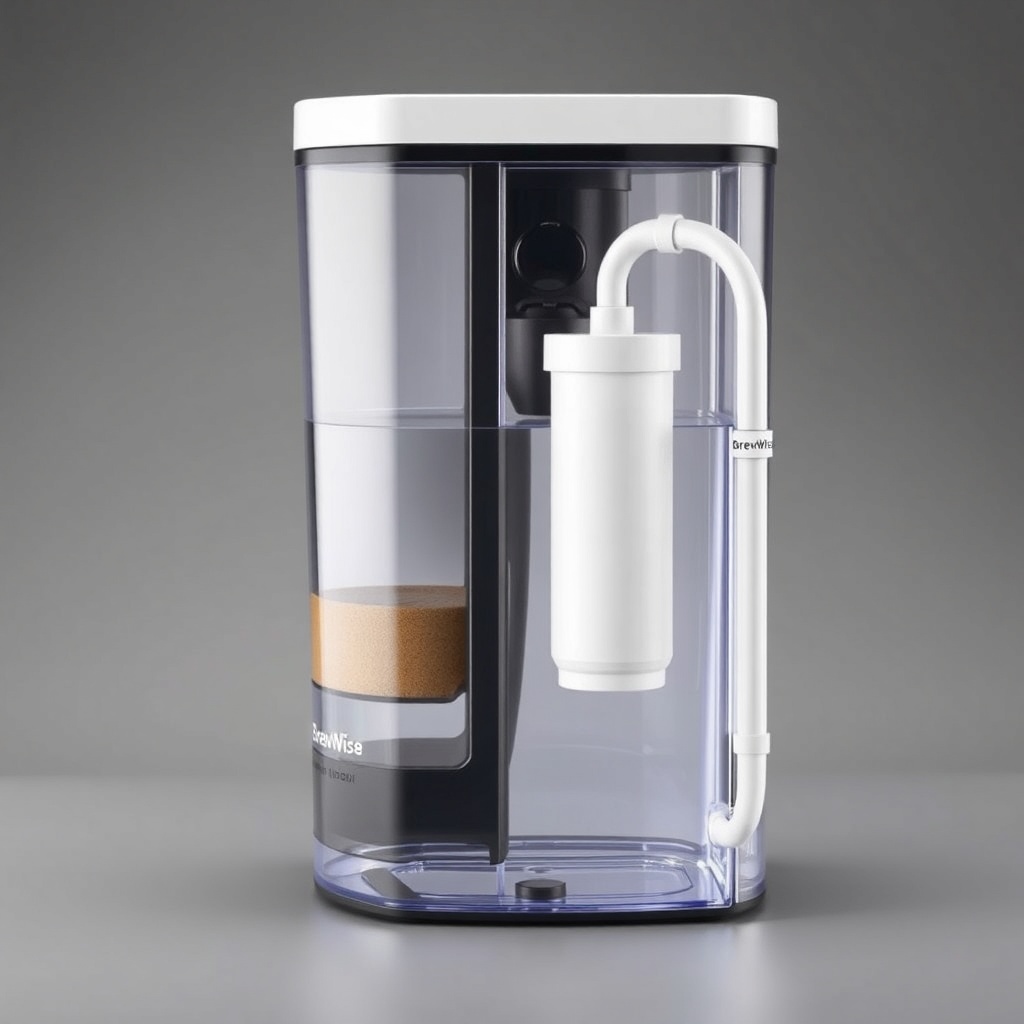
Using filtered or softened water dramatically slows this process. Reverse osmosis or deionised water can be too aggressive, leaching minerals from the metal components, so a balanced approach is recommended. A 90% distilled and 10% tap water mix or a dedicated espresso machine filter works well.
For a deeper dive into water treatment, read BrewWise Thermoblock: Best Water Filter for Mineral Balance, which compares filter types and their impact on machine longevity.
Is the Pump Pressure the Real Culprit?
The BrewWise Thermoblock relies on a vibratory pump to generate steam pressure. If the pump is failing or its internal valve is obstructed, steam output will be weak regardless of how clean the thermoblock is. Typical signs include a buzzing noise that sounds unchanged during steam mode or a pump that runs but delivers no water.
First, verify the pump is running when steam mode is activated. If silent, check electrical connections or a tripped thermal fuse. If the pump runs but pressure is low, scale may be stuck in the pump’s pressure valve. Using a descaling cycle with a citric acid solution can sometimes clear this. If not, pump replacement is the standard fix.
For step-by-step pump diagnostics, see BrewWise Thermoblock: Pump Pressure Too Low? Causes and Fixes, which details test procedures and part numbers.
What Do Owners Say About Low Steam Pressure?
Community forums and product review sections reveal that low steam pressure is the number one reliability complaint for the BrewWise Thermoblock. Owners frequently describe initial enjoyment fading after 6–12 months as steam output declines. Many share that descaling every 2–3 months with a proper espresso machine cleaner resolves the issue temporarily.
Several users report that upgrading to a stainless steel steam tip with larger holes noticeably improves steam flow. Others emphasise that ignoring scale buildup leads to irreversible damage, forcing pump replacement. A common tip is to flush the steam wand daily after use to prevent milk residue from hardening inside the wand.
The consensus: proactive maintenance—especially descaling—is the single most effective strategy. Neglect leads to costly repairs, while regular care keeps the thermoblock performing like new for years.
Frequently Asked Questions
1. How often should I descale my BrewWise Thermoblock?
For average tap water hardness, descale every 2–3 months. If you use very hard water, monthly descaling is recommended. Using filtered water can extend this interval to every 4 months.
2. Can I use vinegar to descale the thermoblock?
Commercial descaling solutions are preferred because they are pH-balanced. Vinegar can be too acidic and damage rubber seals. If you must use vinegar, dilute it 1:4 with water and flush thoroughly afterward.
3. Why does my steam wand sputter instead of producing a steady jet?
Sputtering usually indicates air in the system or a partial blockage. Purge the wand for 10 seconds before inserting it into milk. If sputtering persists, perform a full descaling cycle.
4. Is it safe to use reverse osmosis water in the BrewWise Thermoblock?
Pure reverse osmosis water is stripped of minerals and can leach metals from the thermoblock. Blend it with 10–20% tap water or use a remineralisation filter for safe, balanced water.
5. How do I clean the steam tip if it’s stuck?
If the tip is stuck, apply penetrating oil to the threads and let it sit for 10 minutes. Use a pair of padded pliers to gently turn it. Never force it, as you may damage the wand.
6. What should I do if descaling doesn’t restore steam pressure?
If descaling and tip cleaning fail, the pump or thermoblock may be damaged. Contact BrewWise support or a certified technician. Attempting internal repairs without experience can void the warranty.